
Affirmation Card Deck Design Guide
This guide is for creators designing affirmation cards sized 89 × 146 mm for personal reflection, mindfulness, therapy, coaching, wellness practices, and daily rituals. Affirmation cards are designed to deliver short, meaningful messages that support emotional well-being, intention-setting, and positive mindset development.
Unlike education or flash cards, affirmation cards prioritise emotional clarity, tone, and visual calm over dense information or instruction.
1. What are Affirmation Cards?
7. File Setup & Print Req.
10. Affirmation Size Is Best For
2. Affirmation Card Specifications
5. Card Back Design
8. Paper Stock & Finish
11. Ready to Print?
3. Card Face Design
6. Colour Considerations
9. Common Design Mistakes

1. What are Affirmation Cards?
Affirmation cards are message-based cards intended to:
-
Encourage positive self-talk
-
Support reflection and intention
-
Reinforce habits, values, or emotional states
-
Create moments of pause and mindfulness
They are commonly used in:
-
Personal daily rituals
-
Therapy and coaching sessions
-
Wellness and mindfulness practices
-
Journaling and self-reflection routines
Affirmation cards are typically drawn one at a time and read slowly.
2. Affirmation Card Specifications
Card Size
Affirmation size:
- Affirmation Cards – 89mm x 146mm (3.5″ x 5.75″) – View Full Advanced Size Guide
This size:
-
Fits comfortably in the hand
-
Allows short statements with generous spacing
-
Supports calm, uncluttered layouts
-
Balances portability with readability
Card Count
Typical affirmation decks include:
-
30–50 cards for daily use
-
50–80 cards for broader thematic coverage
Larger decks should be clearly themed or grouped.
Affirmation Card Deck Design Guide
This guide is for creators designing affirmation cards sized 89 × 146 mm for personal reflection, mindfulness, therapy, coaching, wellness practices, and daily rituals. Affirmation cards are designed to deliver short, meaningful messages that support emotional well-being, intention-setting, and positive mindset development.
Unlike education or flash cards, affirmation cards prioritise emotional clarity, tone, and visual calm over dense information or instruction.
1. What are Affirmation Cards?
2. Affirmation Card Specifications
3. Card Face Design
4. Visual Style & Layout
5. Card Back Design
6. Colour Considerations
7. File Setup & Print Req.
8. Paper Stock & Finish
9. Common Design Mistakes
10. Affirmation Size Is Best For
11. Ready to Print?
1. What are Affirmation Cards?
Affirmation cards are message-based cards intended to:
-
Encourage positive self-talk
-
Support reflection and intention
-
Reinforce habits, values, or emotional states
-
Create moments of pause and mindfulness
They are commonly used in:
-
Personal daily rituals
-
Therapy and coaching sessions
-
Wellness and mindfulness practices
-
Journaling and self-reflection routines
Affirmation cards are typically drawn one at a time and read slowly.
2. Affirmation Card Specifications
Card Size
Affirmation size:
- Affirmation Cards – 89mm x 146mm (3.5″ x 5.75″) – View Full Advanced Size Guide
This size:
-
Fits comfortably in the hand
-
Allows short statements with generous spacing
-
Supports calm, uncluttered layouts
-
Balances portability with readability
Card Count
Typical affirmation decks include:
-
30–50 cards for daily use
-
50–80 cards for broader thematic coverage
Larger decks should be clearly themed or grouped.
Affirmation Card Deck Design Guide
This guide is for creators designing affirmation cards sized 89 × 146 mm for personal reflection, mindfulness, therapy, coaching, wellness practices, and daily rituals. Affirmation cards are designed to deliver short, meaningful messages that support emotional well-being, intention-setting, and positive mindset development.
Unlike education or flash cards, affirmation cards prioritise emotional clarity, tone, and visual calm over dense information or instruction.
1. What are Affirmation Cards?
2. Affirmation Card Specifications
3. Card Face Design
4. Visual Style & Layout
5. Card Back Design
6. Colour Considerations
7. File Setup & Print Req.
8. Paper Stock & Finish
9. Common Design Mistakes
10. Affirmation Size Is Best For
11. Ready to Print?
1. What are Affirmation Cards?
Affirmation cards are message-based cards intended to:
-
Encourage positive self-talk
-
Support reflection and intention
-
Reinforce habits, values, or emotional states
-
Create moments of pause and mindfulness
They are commonly used in:
-
Personal daily rituals
-
Therapy and coaching sessions
-
Wellness and mindfulness practices
-
Journaling and self-reflection routines
Affirmation cards are typically drawn one at a time and read slowly.
2. Affirmation Card Specifications
Card Size
Affirmation size:
- Affirmation Cards – 89mm x 146mm (3.5″ x 5.75″) – View Full Advanced Size Guide
This size:
-
Fits comfortably in the hand
-
Allows short statements with generous spacing
-
Supports calm, uncluttered layouts
-
Balances portability with readability
Card Count
Typical affirmation decks include:
-
30–50 cards for daily use
-
50–80 cards for broader thematic coverage
Larger decks should be clearly themed or grouped.
3. Card Face Design
Message Structure
Affirmation cards usually feature one core statement per card.
Common approaches:
-
First-person affirmations (“I am…”, “I choose…”)
-
Gentle prompts or intentions
-
Short reflective statements
Brevity and emotional resonance matter more than explanation.
Typography
Typography carries emotional tone.
Best practices:
-
Medium-to-large font sizes
-
Soft, readable typefaces
-
Ample line spacing and margins
Avoid overly decorative fonts that reduce clarity or sincerity.
3. Card Face Design
Message Structure
Affirmation cards usually feature one core statement per card.
Common approaches:
-
First-person affirmations (“I am…”, “I choose…”)
-
Gentle prompts or intentions
-
Short reflective statements
Brevity and emotional resonance matter more than explanation.
Typography
Typography carries emotional tone.
Best practices:
-
Medium-to-large font sizes
-
Soft, readable typefaces
-
Ample line spacing and margins
Avoid overly decorative fonts that reduce clarity or sincerity.
3. Card Face Design
Message Structure
Affirmation cards usually feature one core statement per card.
Common approaches:
-
First-person affirmations (“I am…”, “I choose…”)
-
Gentle prompts or intentions
-
Short reflective statements
Brevity and emotional resonance matter more than explanation.
Typography
Typography carries emotional tone.
Best practices:
-
Medium-to-large font sizes
-
Soft, readable typefaces
-
Ample line spacing and margins
Avoid overly decorative fonts that reduce clarity or sincerity.
4. Visual Style & Layout
Affirmation cards benefit from visual calm.
Consider:
-
Minimal layouts
-
Balanced white space
-
Subtle illustration or texture
The design should support the message, not compete with it.
5. Card Back Design
Orientation
One-way orientation is standard.
Design considerations:
-
Calm, consistent backs
-
Clear distinction between front and back
-
Avoid visual noise or busy patterns
The back should feel neutral and grounding.
Branding Balance
Branding should be:
-
Discreet
-
Non-intrusive
-
Secondary to the message
Over-branding can disrupt the reflective experience.
4. Visual Style & Layout
Affirmation cards benefit from visual calm.
Consider:
-
Minimal layouts
-
Balanced white space
-
Subtle illustration or texture
The design should support the message, not compete with it.
5. Card Back Design
Orientation
One-way orientation is standard.
Design considerations:
-
Calm, consistent backs
-
Clear distinction between front and back
-
Avoid visual noise or busy patterns
The back should feel neutral and grounding.
Branding Balance
Branding should be:
-
Discreet
-
Non-intrusive
-
Secondary to the message
Over-branding can disrupt the reflective experience.
4. Visual Style & Layout
Affirmation cards benefit from visual calm.
Consider:
-
Minimal layouts
-
Balanced white space
-
Subtle illustration or texture
The design should support the message, not compete with it.
5. Card Back Design
Orientation
One-way orientation is standard.
Design considerations:
-
Calm, consistent backs
-
Clear distinction between front and back
-
Avoid visual noise or busy patterns
The back should feel neutral and grounding.
Branding Balance
Branding should be:
-
Discreet
-
Non-intrusive
-
Secondary to the message
Over-branding can disrupt the reflective experience.
6. Colour Considerations
-
Use soft, harmonious color palettes
-
Maintain sufficient contrast for readability
-
Avoid harsh or overly saturated colors
Assume cards will be used in quiet, low-stimulation environments.
7. File Setup & Print Requirements
Bleed
-
Include bleed on all sides (3mm) – View Full Advanced Card Size Guide
-
Extend background elements fully into bleed
Never place:
-
Key information
near the trim edge.
Safe Zone
Generous safe zones are essential for text-based designs.
Resolution & Colour Mode
-
Minimum 300 DPI
-
CMYK colour mode
Proof prints are strongly recommended to assess tone and legibility.
6. Colour Considerations
-
Use soft, harmonious color palettes
-
Maintain sufficient contrast for readability
-
Avoid harsh or overly saturated colors
Assume cards will be used in quiet, low-stimulation environments.
7. File Setup & Print Requirements
Bleed
-
Include bleed on all sides (3mm) – View Full Advanced Card Size Guide
-
Extend background elements fully into bleed
Never place:
-
Key information
near the trim edge.
Safe Zone
Generous safe zones are essential for text-based designs.
Resolution & Colour Mode
-
Minimum 300 DPI
-
CMYK colour mode
Proof prints are strongly recommended to assess tone and legibility.
6. Colour Considerations
-
Use soft, harmonious color palettes
-
Maintain sufficient contrast for readability
-
Avoid harsh or overly saturated colors
Assume cards will be used in quiet, low-stimulation environments.
7. File Setup & Print Requirements
Bleed
-
Include bleed on all sides (3mm) – View Full Advanced Card Size Guide
-
Extend background elements fully into bleed
Never place:
-
Key information
near the trim edge.
Safe Zone
Generous safe zones are essential for text-based designs.
Resolution & Colour Mode
-
Minimum 300 DPI
-
CMYK colour mode
Proof prints are strongly recommended to assess tone and legibility.
8. Paper Stock & Finish
Common Choices
- Smooth finish: Clean look, softer handling
- Linen or textured finish: Improved grip, traditional feel
Consider:
Affirmation cards are handled slowly and frequently—feel matters.
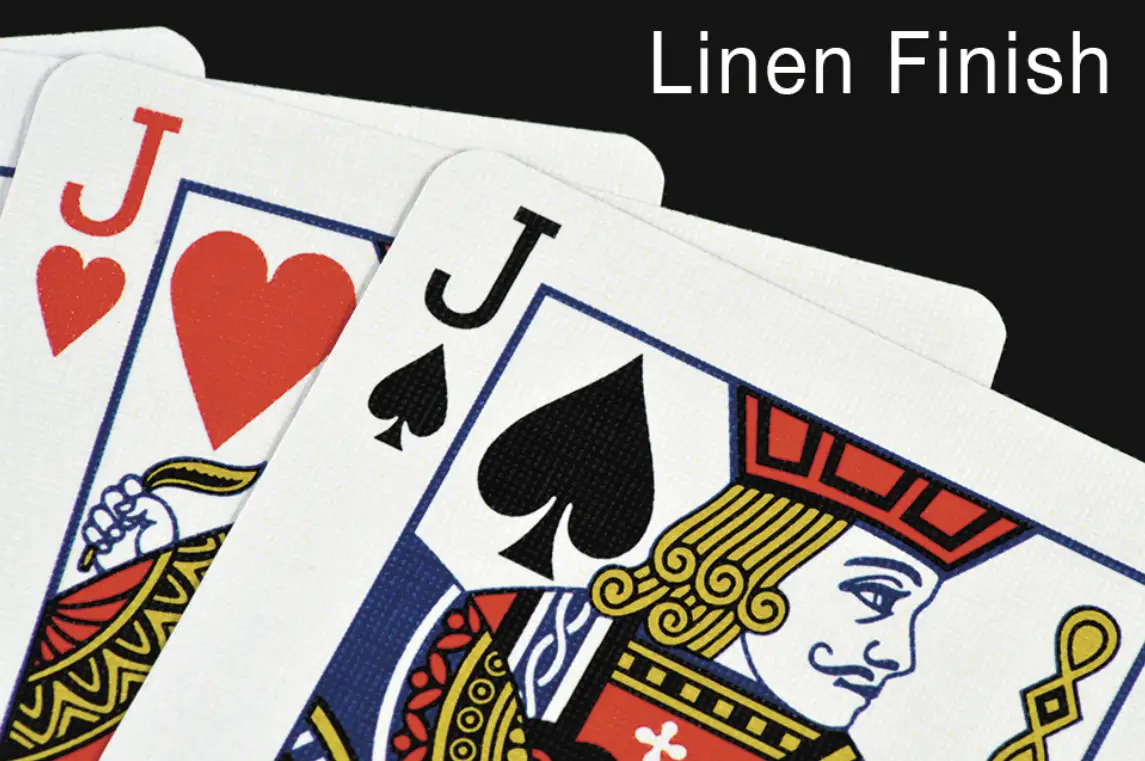
Benefits of Linen Finish
-
Enhanced Durability: The embossed texture helps reduce visible wear, making cards more resistant to scratches and creases.
-
Improved Handling: Ideal for sleight of hand and flourishes, the Linen finish offers a tactile grip without sticking.
-
Professional Look and Feel: That subtle texture creates a premium, sophisticated appearance that feels satisfying in the hand.
This finish is a favourite among professional magicians and cardists for its balance of control and fluidity. It’s also incredibly forgiving during fast-paced games, helping maintain crisp edges and clean surfaces even after extended use.
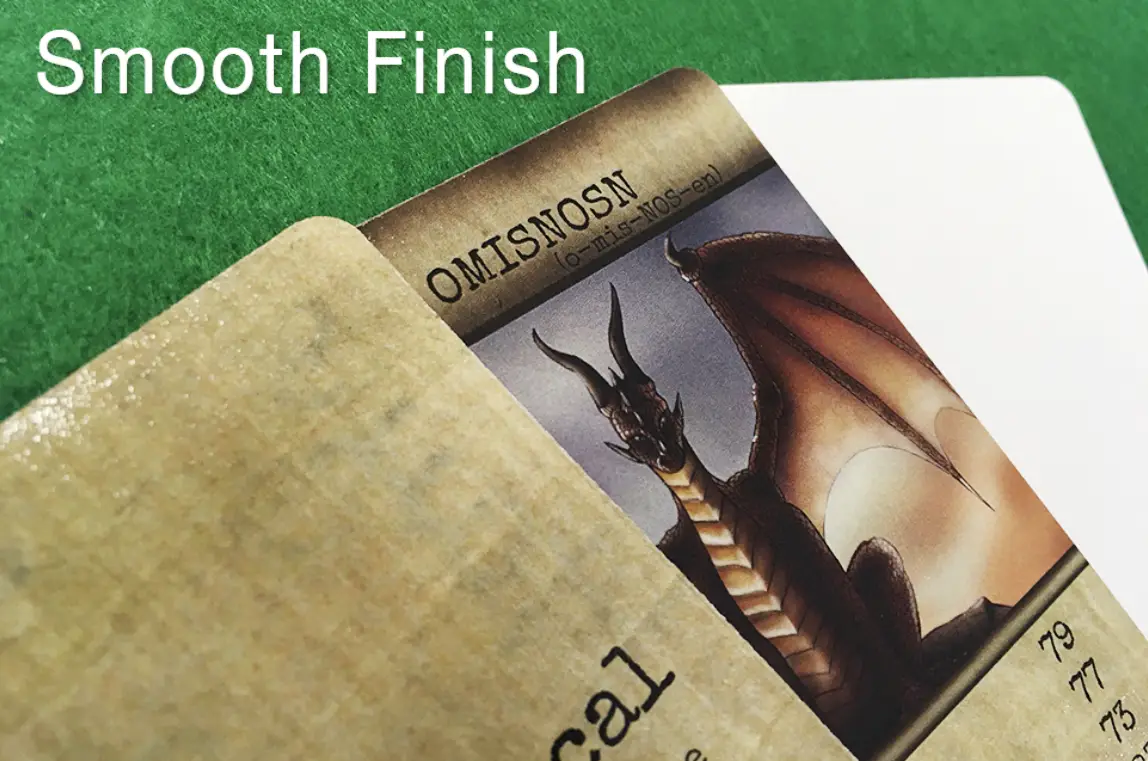
Benefits of Smooth Finish
-
Silky Shuffling: Smooth cards slide effortlessly, making for seamless overhand and riffle shuffles.
-
Vibrant Print Quality: With no surface embossing, artwork appears ultra-crisp and vivid, ideal for collectors or visually striking designs.
-
Long-Lasting Brilliance: The finish helps lock in colours, preventing fading or dulling over time.
Smooth finishes appeal to players and collectors alike who value a clean aesthetic and smooth handling. It provides a slick feel that’s both modern and classic.
8. Paper Stock & Finish
Common Choices
- Smooth finish: Clean look, softer handling
- Linen or textured finish: Improved grip, traditional feel
Consider:
Affirmation cards are handled slowly and frequently—feel matters.
Benefits of Linen Finish
-
Enhanced Durability: The embossed texture helps reduce visible wear, making cards more resistant to scratches and creases.
-
Improved Handling: Ideal for sleight of hand and flourishes, the Linen finish offers a tactile grip without sticking.
-
Professional Look and Feel: That subtle texture creates a premium, sophisticated appearance that feels satisfying in the hand.
This finish is a favourite among professional magicians and cardists for its balance of control and fluidity. It’s also incredibly forgiving during fast-paced games, helping maintain crisp edges and clean surfaces even after extended use.
Benefits of Smooth Finish
-
Silky Shuffling: Smooth cards slide effortlessly, making for seamless overhand and riffle shuffles.
-
Vibrant Print Quality: With no surface embossing, artwork appears ultra-crisp and vivid, ideal for collectors or visually striking designs.
-
Long-Lasting Brilliance: The finish helps lock in colours, preventing fading or dulling over time.
Smooth finishes appeal to players and collectors alike who value a clean aesthetic and smooth handling. It provides a slick feel that’s both modern and classic.
8. Paper Stock & Finish
Common Choices
- Smooth finish: Clean look, softer handling
- Linen or textured finish: Improved grip, traditional feel
Consider:
Affirmation cards are handled slowly and frequently—feel matters.
Benefits of Linen Finish
-
Enhanced Durability: The embossed texture helps reduce visible wear, making cards more resistant to scratches and creases.
-
Improved Handling: Ideal for sleight of hand and flourishes, the Linen finish offers a tactile grip without sticking.
-
Professional Look and Feel: That subtle texture creates a premium, sophisticated appearance that feels satisfying in the hand.
This finish is a favourite among professional magicians and cardists for its balance of control and fluidity. It’s also incredibly forgiving during fast-paced games, helping maintain crisp edges and clean surfaces even after extended use.
Benefits of Smooth Finish
-
Silky Shuffling: Smooth cards slide effortlessly, making for seamless overhand and riffle shuffles.
-
Vibrant Print Quality: With no surface embossing, artwork appears ultra-crisp and vivid, ideal for collectors or visually striking designs.
-
Long-Lasting Brilliance: The finish helps lock in colours, preventing fading or dulling over time.
Smooth finishes appeal to players and collectors alike who value a clean aesthetic and smooth handling. It provides a slick feel that’s both modern and classic.
9. Common Affirmation Card Design Mistakes
-
Overcrowding cards with text
-
Using fonts that feel cold or aggressive
-
Busy backgrounds that distract from the message
-
Low contrast between text and background
-
Treating affirmation cards like informational cards
Emotional clarity should guide every design decision.
10. Who This Deck Type Is Best For
Affirmation cards are ideal for:
-
Wellness and mindfulness creators
-
Therapists and coaches
-
Journaling and self-care brands
-
Personal development tools
If your project requires explanation, instruction, or gameplay, other card formats may be more appropriate.
11. Ready to Print?
Once your affirmation cards feel calm, readable, and emotionally aligned, you’re ready to proceed to production.
Test prints are strongly recommended, especially to confirm tone, spacing, and colour softness.
9. Common Affirmation Card Design Mistakes
-
Overcrowding cards with text
-
Using fonts that feel cold or aggressive
-
Busy backgrounds that distract from the message
-
Low contrast between text and background
-
Treating affirmation cards like informational cards
Emotional clarity should guide every design decision.
10. Who This Deck Type Is Best For
Affirmation cards are ideal for:
-
Wellness and mindfulness creators
-
Therapists and coaches
-
Journaling and self-care brands
-
Personal development tools
If your project requires explanation, instruction, or gameplay, other card formats may be more appropriate.
11. Ready to Print?
Once your affirmation cards feel calm, readable, and emotionally aligned, you’re ready to proceed to production.
Test prints are strongly recommended, especially to confirm tone, spacing, and colour softness.
9. Common Affirmation Card Design Mistakes
-
Overcrowding cards with text
-
Using fonts that feel cold or aggressive
-
Busy backgrounds that distract from the message
-
Low contrast between text and background
-
Treating affirmation cards like informational cards
Emotional clarity should guide every design decision.
10. Who This Deck Type Is Best For
Affirmation cards are ideal for:
-
Wellness and mindfulness creators
-
Therapists and coaches
-
Journaling and self-care brands
-
Personal development tools
If your project requires explanation, instruction, or gameplay, other card formats may be more appropriate.
11. Ready to Print?
Once your affirmation cards feel calm, readable, and emotionally aligned, you’re ready to proceed to production.
Test prints are strongly recommended, especially to confirm tone, spacing, and colour softness.