
Coaching Card Deck Design Guide
This guide is for creators designing coaching cards used in facilitation, personal development, leadership training, therapy, and guided conversations. Coaching cards are reflective tools designed to prompt insight, dialogue, and action rather than deliver fixed answers.
We offer coaching cards in two sizes:
63.5mm x 88.8mm (2.5″ x 3.5″)
89mm x 146mm (3.5″ x 5.75″)
Each size supports a different coaching context and style of use.
1. What are Coaching Cards?
4. Information Density
7. Colour Considerations
10. Common Design Mistakes
2. Coaching Card Specifications
5. Visual Style & Tone
8. File Setup & Print Requirements
11. Ready to Print?
3. Card Face Design
6. Card Back Design
9. Paper Stock & Finish

1. What are Coaching Cards?
Coaching cards are prompt-based cards used to:
-
Encourage reflection and self-awareness
-
Support structured conversations
-
Unlock insights through questions or themes
-
Guide individual or group coaching sessions
They are commonly used in:
-
One-to-one coaching
-
Group facilitation and workshops
-
Leadership and team development
-
Therapy and personal growth settings
Coaching cards are read thoughtfully and discussed rather than played.
2. Coaching Card Specifications
63.5 × 88.8 mm
This compact format:
-
Fits easily in the hand
-
Encourages concise prompts or questions
-
Is ideal for quick draws and informal sessions
-
Works well for personal or one-to-one coaching
This size prioritises focus and simplicity.
89 × 146 mm
This larger format:
-
Allows longer questions or reflective statements
-
Supports exercises, frameworks, or follow-up prompts
-
Improves readability in group settings
-
Is suitable for workshops and facilitated sessions
This size supports deeper exploration and discussion.
Coaching Card Deck Design Guide
This guide is for creators designing coaching cards used in facilitation, personal development, leadership training, therapy, and guided conversations. Coaching cards are reflective tools designed to prompt insight, dialogue, and action rather than deliver fixed answers.
We offer coaching cards in two sizes:
63.5mm x 88.8mm (2.5″ x 3.5″)
89mm x 146mm (3.5″ x 5.75″)
Each size supports a different coaching context and style of use.
1. What are Coaching Cards?
2. Coaching Card Specifications
3. Card Face Design
4. Information Density
5. Visual Style & Tone
6. Card Back Design
7. Colour Considerations
8. File Setup & Print Requirements
9. Paper Stock & Finish
10. Common Design Mistakes
11. Ready to Print?
1. What are Coaching Cards?
Coaching cards are prompt-based cards used to:
-
Encourage reflection and self-awareness
-
Support structured conversations
-
Unlock insights through questions or themes
-
Guide individual or group coaching sessions
They are commonly used in:
-
One-to-one coaching
-
Group facilitation and workshops
-
Leadership and team development
-
Therapy and personal growth settings
Coaching cards are read thoughtfully and discussed rather than played.
2. Coaching Card Specifications
63.5 × 88.8 mm
This compact format:
-
Fits easily in the hand
-
Encourages concise prompts or questions
-
Is ideal for quick draws and informal sessions
-
Works well for personal or one-to-one coaching
This size prioritises focus and simplicity.
89 × 146 mm
This larger format:
-
Allows longer questions or reflective statements
-
Supports exercises, frameworks, or follow-up prompts
-
Improves readability in group settings
-
Is suitable for workshops and facilitated sessions
This size supports deeper exploration and discussion.
Coaching Card Deck Design Guide
This guide is for creators designing coaching cards used in facilitation, personal development, leadership training, therapy, and guided conversations. Coaching cards are reflective tools designed to prompt insight, dialogue, and action rather than deliver fixed answers.
We offer coaching cards in two sizes:
63.5mm x 88.8mm (2.5″ x 3.5″)
89mm x 146mm (3.5″ x 5.75″)
Each size supports a different coaching context and style of use.
1. What are Coaching Cards?
2. Coaching Card Specifications
3. Card Face Design
4. Information Density
5. Visual Style & Tone
6. Card Back Design
7. Colour Considerations
8. File Setup & Print Requirements
9. Paper Stock & Finish
10. Common Design Mistakes
11. Ready to Print?
1. What are Coaching Cards?
Coaching cards are prompt-based cards used to:
-
Encourage reflection and self-awareness
-
Support structured conversations
-
Unlock insights through questions or themes
-
Guide individual or group coaching sessions
They are commonly used in:
-
One-to-one coaching
-
Group facilitation and workshops
-
Leadership and team development
-
Therapy and personal growth settings
Coaching cards are read thoughtfully and discussed rather than played.
2. Coaching Card Specifications
63.5 × 88.8 mm
This compact format:
-
Fits easily in the hand
-
Encourages concise prompts or questions
-
Is ideal for quick draws and informal sessions
-
Works well for personal or one-to-one coaching
This size prioritises focus and simplicity.
89 × 146 mm
This larger format:
-
Allows longer questions or reflective statements
-
Supports exercises, frameworks, or follow-up prompts
-
Improves readability in group settings
-
Is suitable for workshops and facilitated sessions
This size supports deeper exploration and discussion.
3. Card Face Design
Prompt Structure
Coaching cards typically feature one primary prompt per card.
Common prompt types:
-
Open-ended questions
-
Reflective statements
-
Exercises or actions
-
Perspective-shifting prompts
Clarity matters more than cleverness.
Typography
Typography should feel neutral and supportive.
Best practices:
-
Clear, readable fonts
-
Strong hierarchy for longer prompts
-
Generous spacing to support calm reading
Avoid aggressive or overly stylised typefaces.
3. Card Face Design
Prompt Structure
Coaching cards typically feature one primary prompt per card.
Common prompt types:
-
Open-ended questions
-
Reflective statements
-
Exercises or actions
-
Perspective-shifting prompts
Clarity matters more than cleverness.
Typography
Typography should feel neutral and supportive.
Best practices:
-
Clear, readable fonts
-
Strong hierarchy for longer prompts
-
Generous spacing to support calm reading
Avoid aggressive or overly stylised typefaces.
3. Card Face Design
Prompt Structure
Coaching cards typically feature one primary prompt per card.
Common prompt types:
-
Open-ended questions
-
Reflective statements
-
Exercises or actions
-
Perspective-shifting prompts
Clarity matters more than cleverness.
Typography
Typography should feel neutral and supportive.
Best practices:
-
Clear, readable fonts
-
Strong hierarchy for longer prompts
-
Generous spacing to support calm reading
Avoid aggressive or overly stylised typefaces.
4. Information Density
Information density should match the chosen size.
Guidelines:
-
Small cards → short, focused prompts
-
Large cards → structured reflection or exercises
Avoid cramming content simply because space is available.
5. Visual Style & Tone
Coaching cards benefit from restrained design.
Consider:
-
Minimal layouts
-
Calm colour palettes
-
Subtle illustrations or icons
Visuals should support reflection, not dominate attention.
4. Information Density
Information density should match the chosen size.
Guidelines:
-
Small cards → short, focused prompts
-
Large cards → structured reflection or exercises
Avoid cramming content simply because space is available.
5. Visual Style & Tone
Coaching cards benefit from restrained design.
Consider:
-
Minimal layouts
-
Calm colour palettes
-
Subtle illustrations or icons
Visuals should support reflection, not dominate attention.
4. Information Density
Information density should match the chosen size.
Guidelines:
-
Small cards → short, focused prompts
-
Large cards → structured reflection or exercises
Avoid cramming content simply because space is available.
5. Visual Style & Tone
Coaching cards benefit from restrained design.
Consider:
-
Minimal layouts
-
Calm colour palettes
-
Subtle illustrations or icons
Visuals should support reflection, not dominate attention.
6. Card Back Design
Orientation
One-way orientation is standard.
Design considerations:
-
Clear distinction between front and back
-
Consistent orientation across the deck
-
Calm, neutral back designs
The back should not distract from the coaching process.
Branding
Branding should be discreet.
Overt branding can:
-
Interrupt reflection
-
Shift focus away from the user
Subtle logos or marks are usually sufficient.
7. Colour Considerations
-
Use colour intentionally to set tone or categorise themes
-
Maintain strong contrast for readability
-
Avoid harsh or overly stimulating palettes
Assume use in varied lighting and emotional contexts.
8. File Setup & Print Requirements
Bleed
-
Include bleed on all sides (3mm) – View Full Advanced Card Size Guide
-
Extend background elements fully into bleed
Never place text or prompts near trim edges.
Safe Zone
Text-heavy coaching cards require generous safe zones.
Resolution & Colour Mode
-
Minimum 300 DPI
-
CMYK colour mode
Proof prints are strongly recommended.
6. Card Back Design
Orientation
One-way orientation is standard.
Design considerations:
-
Clear distinction between front and back
-
Consistent orientation across the deck
-
Calm, neutral back designs
The back should not distract from the coaching process.
Branding
Branding should be discreet.
Overt branding can:
-
Interrupt reflection
-
Shift focus away from the user
Subtle logos or marks are usually sufficient.
7. Colour Considerations
-
Use colour intentionally to set tone or categorise themes
-
Maintain strong contrast for readability
-
Avoid harsh or overly stimulating palettes
Assume use in varied lighting and emotional contexts.
8. File Setup & Print Requirements
Bleed
-
Include bleed on all sides (3mm) – View Full Advanced Card Size Guide
-
Extend background elements fully into bleed
Never place text or prompts near trim edges.
Safe Zone
Text-heavy coaching cards require generous safe zones.
Resolution & Colour Mode
-
Minimum 300 DPI
-
CMYK colour mode
Proof prints are strongly recommended.
6. Card Back Design
Orientation
One-way orientation is standard.
Design considerations:
-
Clear distinction between front and back
-
Consistent orientation across the deck
-
Calm, neutral back designs
The back should not distract from the coaching process.
Branding
Branding should be discreet.
Overt branding can:
-
Interrupt reflection
-
Shift focus away from the user
Subtle logos or marks are usually sufficient.
7. Colour Considerations
-
Use colour intentionally to set tone or categorise themes
-
Maintain strong contrast for readability
-
Avoid harsh or overly stimulating palettes
Assume use in varied lighting and emotional contexts.
8. File Setup & Print Requirements
Bleed
-
Include bleed on all sides (3mm) – View Full Advanced Card Size Guide
-
Extend background elements fully into bleed
Never place text or prompts near trim edges.
Safe Zone
Text-heavy coaching cards require generous safe zones.
Resolution & Colour Mode
-
Minimum 300 DPI
-
CMYK colour mode
Proof prints are strongly recommended.
9. Paper Stock & Finish
Common Choices
- Smooth finish: Clean look, softer handling
- Linen or textured finish: Improved grip, traditional feel
Consider:
Coaching cards are often reused across many sessions.
Benefits of Linen Finish
-
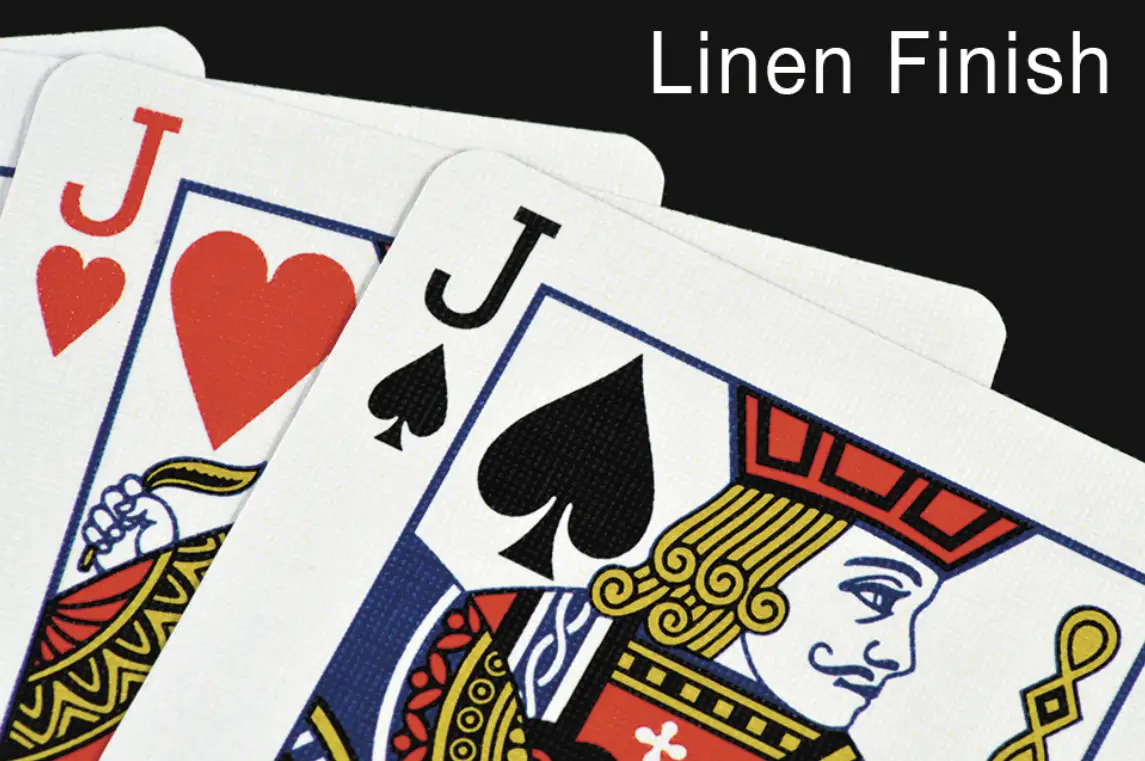
Enhanced Durability: The embossed texture helps reduce visible wear, making cards more resistant to scratches and creases.
-
Improved Handling: Ideal for sleight of hand and flourishes, the Linen finish offers a tactile grip without sticking.
-
Professional Look and Feel: That subtle texture creates a premium, sophisticated appearance that feels satisfying in the hand.
This finish is a favourite among professional magicians and cardists for its balance of control and fluidity. It’s also incredibly forgiving during fast-paced games, helping maintain crisp edges and clean surfaces even after extended use.
Benefits of Smooth Finish
-
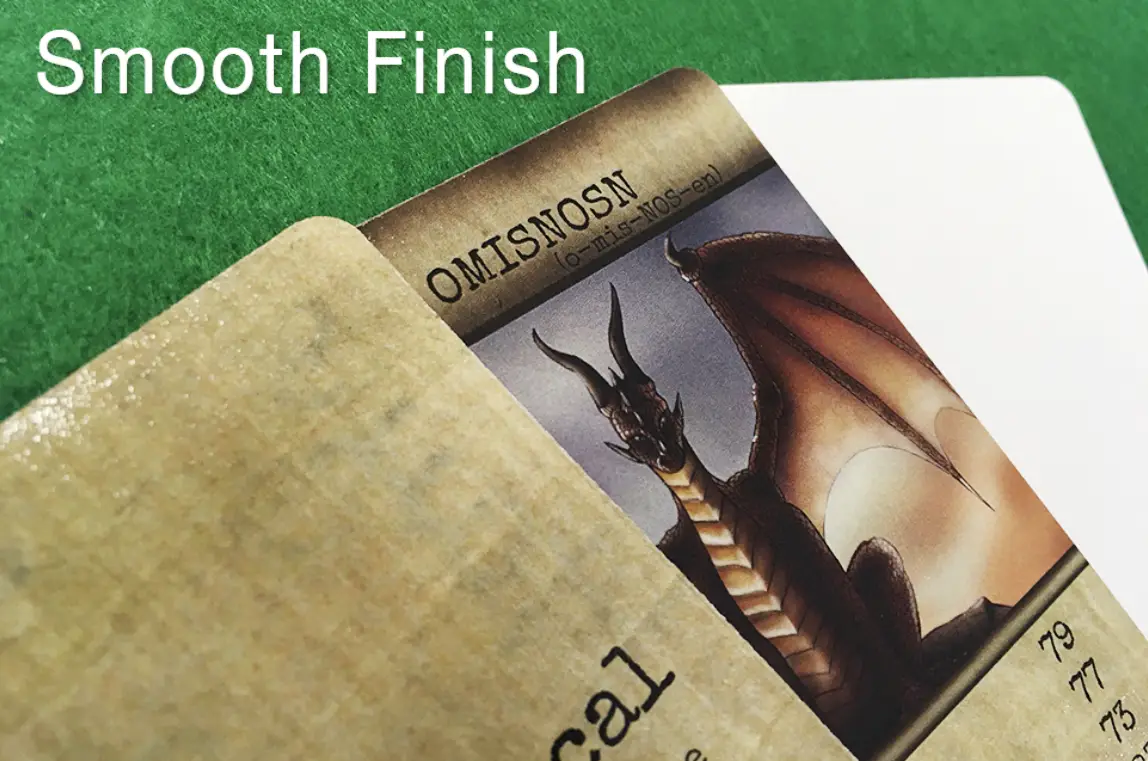
Silky Shuffling: Smooth cards slide effortlessly, making for seamless overhand and riffle shuffles.
-
Vibrant Print Quality: With no surface embossing, artwork appears ultra-crisp and vivid, ideal for collectors or visually striking designs.
-
Long-Lasting Brilliance: The finish helps lock in colours, preventing fading or dulling over time.
Smooth finishes appeal to players and collectors alike who value a clean aesthetic and smooth handling. It provides a slick feel that’s both modern and classic.
9. Paper Stock & Finish
Common Choices
- Smooth finish: Clean look, softer handling
- Linen or textured finish: Improved grip, traditional feel
Consider:
Coaching cards are often reused across many sessions.
Benefits of Linen Finish
-
Enhanced Durability: The embossed texture helps reduce visible wear, making cards more resistant to scratches and creases.
-
Improved Handling: Ideal for sleight of hand and flourishes, the Linen finish offers a tactile grip without sticking.
-
Professional Look and Feel: That subtle texture creates a premium, sophisticated appearance that feels satisfying in the hand.
This finish is a favourite among professional magicians and cardists for its balance of control and fluidity. It’s also incredibly forgiving during fast-paced games, helping maintain crisp edges and clean surfaces even after extended use.
Benefits of Smooth Finish
-
Silky Shuffling: Smooth cards slide effortlessly, making for seamless overhand and riffle shuffles.
-
Vibrant Print Quality: With no surface embossing, artwork appears ultra-crisp and vivid, ideal for collectors or visually striking designs.
-
Long-Lasting Brilliance: The finish helps lock in colours, preventing fading or dulling over time.
Smooth finishes appeal to players and collectors alike who value a clean aesthetic and smooth handling. It provides a slick feel that’s both modern and classic.
9. Paper Stock & Finish
Common Choices
- Smooth finish: Clean look, softer handling
- Linen or textured finish: Improved grip, traditional feel
Consider:
Coaching cards are often reused across many sessions.
Benefits of Linen Finish
-
Enhanced Durability: The embossed texture helps reduce visible wear, making cards more resistant to scratches and creases.
-
Improved Handling: Ideal for sleight of hand and flourishes, the Linen finish offers a tactile grip without sticking.
-
Professional Look and Feel: That subtle texture creates a premium, sophisticated appearance that feels satisfying in the hand.
This finish is a favourite among professional magicians and cardists for its balance of control and fluidity. It’s also incredibly forgiving during fast-paced games, helping maintain crisp edges and clean surfaces even after extended use.
Benefits of Smooth Finish
-
Silky Shuffling: Smooth cards slide effortlessly, making for seamless overhand and riffle shuffles.
-
Vibrant Print Quality: With no surface embossing, artwork appears ultra-crisp and vivid, ideal for collectors or visually striking designs.
-
Long-Lasting Brilliance: The finish helps lock in colours, preventing fading or dulling over time.
Smooth finishes appeal to players and collectors alike who value a clean aesthetic and smooth handling. It provides a slick feel that’s both modern and classic.
10. Common Coaching Card Design Mistakes
-
Overloading cards with text
-
Asking leading or closed questions
-
Using decorative design that distracts from prompts
-
Inconsistent tone across the deck
-
Treating coaching cards like affirmation or education cards
Effective coaching cards create space for insight.
11. Ready to Print?
Once your coaching cards are clear, readable and aligned with your coaching intent, you’re ready to proceed to production.
Test prints are strongly recommended to confirm tone, spacing and usability.
10. Common Coaching Card Design Mistakes
-
Overloading cards with text
-
Asking leading or closed questions
-
Using decorative design that distracts from prompts
-
Inconsistent tone across the deck
-
Treating coaching cards like affirmation or education cards
Effective coaching cards create space for insight.
11. Ready to Print?
Once your coaching cards are clear, readable and aligned with your coaching intent, you’re ready to proceed to production.
Test prints are strongly recommended to confirm tone, spacing and usability.
10. Common Coaching Card Design Mistakes
-
Overloading cards with text
-
Asking leading or closed questions
-
Using decorative design that distracts from prompts
-
Inconsistent tone across the deck
-
Treating coaching cards like affirmation or education cards
Effective coaching cards create space for insight.
11. Ready to Print?
Once your coaching cards are clear, readable and aligned with your coaching intent, you’re ready to proceed to production.
Test prints are strongly recommended to confirm tone, spacing and usability.