
Flash Card Deck Design Guide
This guide is for creators designing custom flash cards for education, training, workshops, language learning, therapy, or professional development. Flash cards are function-first tools: clarity, durability, and ease of use matter more than decoration.
This guide explains how to design flash cards that are effective for learning and reliable in print.
1. What are Flash Cards?
7. File Setup & Print Req.
10. Flash Size Is Best For
2. Flash Card Specifications
5. Card Back Design
8. Paper Stock & Finish
11. Ready to Print?
3. Card Face Design
6. Colour Considerations
9. Common Design Mistakes

1. What are Flash Cards?
Flash cards are instructional cards designed to:
-
Present information in small, repeatable units
-
Support memorization, recall, and active learning
-
Be used repeatedly over long periods
They are commonly used in:
-
Schools and classrooms
-
Language learning
-
Corporate training
-
Therapy and coaching
Unlike playing cards, flash cards are usually read, flipped, stacked, and handled frequently.
2. Flash Card Specifications
Card Size
Flash size:
- 105mm x 148.5mm (4.1″ x 5.8″) (A6) – View Full Advanced Size Guide
Card Count
Flash card decks vary widely:
-
20–50 cards for focused topics
-
100+ cards for comprehensive learning systems
Large decks should be carefully structured to avoid overwhelming users.
Flash Card Deck
Design Guide
This guide is for creators designing custom flash cards for education, training, workshops, language learning, therapy, or professional development. Flash cards are function-first tools: clarity, durability, and ease of use matter more than decoration.
This guide explains how to design flash cards that are effective for learning and reliable in print.
1. What are Flash Cards?
2. Flash Card Specifications
3. Card Face Design
4. Information Hierarchy
5. Card Back Design
6. Colour Considerations
7. File Setup & Print Req.
8. Paper Stock & Finish
9. Common Design Mistakes
10. Flash Size Is Best For
11. Ready to Print?
1. What are Flash Cards?
Flash cards are instructional cards designed to:
-
Present information in small, repeatable units
-
Support memorization, recall, and active learning
-
Be used repeatedly over long periods
They are commonly used in:
-
Schools and classrooms
-
Language learning
-
Corporate training
-
Therapy and coaching
Unlike playing cards, flash cards are usually read, flipped, stacked, and handled frequently.
2. Flash Card Specifications
Card Size
Flash size:
- 105mm x 148.5mm (4.1″ x 5.8″) (A6) – View Full Advanced Size Guide
Card Count
Flash card decks vary widely:
-
20–50 cards for focused topics
-
100+ cards for comprehensive learning systems
Large decks should be carefully structured to avoid overwhelming users.
Flash Card Deck Design Guide
This guide is for creators designing custom flash cards for education, training, workshops, language learning, therapy, or professional development. Flash cards are function-first tools: clarity, durability, and ease of use matter more than decoration.
This guide explains how to design flash cards that are effective for learning and reliable in print.
1. What are Flash Cards?
2. Flash Card Specifications
3. Card Face Design
4. Information Hierarchy
5. Card Back Design
6. Colour Considerations
7. File Setup & Print Req.
8. Paper Stock & Finish
9. Common Design Mistakes
10. Flash Size Is Best For
11. Ready to Print?
1. What are Flash Cards?
Flash cards are instructional cards designed to:
-
Present information in small, repeatable units
-
Support memorization, recall, and active learning
-
Be used repeatedly over long periods
They are commonly used in:
-
Schools and classrooms
-
Language learning
-
Corporate training
-
Therapy and coaching
Unlike playing cards, flash cards are usually read, flipped, stacked, and handled frequently.
2. Flash Card Specifications
Card Size
Flash size:
- 105mm x 148.5mm (4.1″ x 5.8″) (A6) – View Full Advanced Size Guide
Card Count
Flash card decks vary widely:
-
20–50 cards for focused topics
-
100+ cards for comprehensive learning systems
Large decks should be carefully structured to avoid overwhelming users.
3. Card Face Design
Front / Back Roles
Flash cards typically have distinct front and back functions.
Common structures:
-
Question → Answer
-
Term → Definition
-
Image → Label
-
Prompt → Explanation
Maintain absolute consistency throughout the deck.
Typography
Text clarity is critical.
Best practices:
-
Use highly legible fonts
-
Maintain generous line spacing
-
Avoid long paragraphs
If users struggle to read cards quickly, learning effectiveness drops.
3. Card Face Design
Front / Back Roles
Flash cards typically have distinct front and back functions.
Common structures:
-
Question → Answer
-
Term → Definition
-
Image → Label
-
Prompt → Explanation
Maintain absolute consistency throughout the deck.
Typography
Text clarity is critical.
Best practices:
-
Use highly legible fonts
-
Maintain generous line spacing
-
Avoid long paragraphs
If users struggle to read cards quickly, learning effectiveness drops.
3. Card Face Design
Front / Back Roles
Flash cards typically have distinct front and back functions.
Common structures:
-
Question → Answer
-
Term → Definition
-
Image → Label
-
Prompt → Explanation
Maintain absolute consistency throughout the deck.
Typography
Text clarity is critical.
Best practices:
-
Use highly legible fonts
-
Maintain generous line spacing
-
Avoid long paragraphs
If users struggle to read cards quickly, learning effectiveness drops.
4. Information Hierarchy
Flash cards work best when information is layered.
Consider:
-
Primary content (what must be remembered)
-
Secondary content (examples, hints)
-
Visual anchors (icons or images)
Do not treat each card as a poster—simplicity wins.
5. Card Back Design
Orientation
Unlike game decks, flash cards are often one-way by design.
This is acceptable when:
-
Front and back serve different purposes
-
Orientation aids learning
However, orientation should be obvious and consistent.
Visual Consistency
Card backs (or secondary sides) should:
-
Reinforce deck identity
-
Avoid visual noise
-
Not distract from learning
Decorative patterns should be subtle.
4. Information Hierarchy
Flash cards work best when information is layered.
Consider:
-
Primary content (what must be remembered)
-
Secondary content (examples, hints)
-
Visual anchors (icons or images)
Do not treat each card as a poster—simplicity wins.
5. Card Back Design
Orientation
Unlike game decks, flash cards are often one-way by design.
This is acceptable when:
-
Front and back serve different purposes
-
Orientation aids learning
However, orientation should be obvious and consistent.
Visual Consistency
Card backs (or secondary sides) should:
-
Reinforce deck identity
-
Avoid visual noise
-
Not distract from learning
Decorative patterns should be subtle.
4. Information Hierarchy
Flash cards work best when information is layered.
Consider:
-
Primary content (what must be remembered)
-
Secondary content (examples, hints)
-
Visual anchors (icons or images)
Do not treat each card as a poster—simplicity wins.
5. Card Back Design
Orientation
Unlike game decks, flash cards are often one-way by design.
This is acceptable when:
-
Front and back serve different purposes
-
Orientation aids learning
However, orientation should be obvious and consistent.
Visual Consistency
Card backs (or secondary sides) should:
-
Reinforce deck identity
-
Avoid visual noise
-
Not distract from learning
Decorative patterns should be subtle.
6. Colour Considerations
-
Use colour to categorise or group information
-
Avoid relying on colour alone for meaning
-
Ensure strong contrast for text
Flash cards are often used under varied lighting conditions, test for readability.
7. File Setup & Print Requirements
Bleed
-
Include bleed on all sides (3mm) – View Full Advanced Card Size Guide
-
Extend background elements fully into bleed
Never place:
-
Titles
-
Icons
-
Key information
near the trim edge.
Safe Zone
Text-heavy cards need generous safe zones to prevent trimming issues.
Resolution & Colour Mode
-
Minimum 300 DPI
-
CMYK colour mode
Proofing is especially important for small text sizes.
6. Colour Considerations
-
Use colour to categorise or group information
-
Avoid relying on colour alone for meaning
-
Ensure strong contrast for text
Flash cards are often used under varied lighting conditions, test for readability.
7. File Setup & Print Requirements
Bleed
-
Include bleed on all sides (3mm) – View Full Advanced Card Size Guide
-
Extend background elements fully into bleed
Never place:
-
Titles
-
Icons
-
Key information
near the trim edge.
Safe Zone
Text-heavy cards need generous safe zones to prevent trimming issues.
Resolution & Colour Mode
-
Minimum 300 DPI
-
CMYK colour mode
Proofing is especially important for small text sizes.
6. Colour Considerations
-
Use colour to categorise or group information
-
Avoid relying on colour alone for meaning
-
Ensure strong contrast for text
Flash cards are often used under varied lighting conditions, test for readability.
7. File Setup & Print Requirements
Bleed
-
Include bleed on all sides (3mm) – View Full Advanced Card Size Guide
-
Extend background elements fully into bleed
Never place:
-
Titles
-
Icons
-
Key information
near the trim edge.
Safe Zone
Text-heavy cards need generous safe zones to prevent trimming issues.
Resolution & Colour Mode
-
Minimum 300 DPI
-
CMYK colour mode
Proofing is especially important for small text sizes.
8. Paper Stock & Finish
Common Choices
- Smooth finish: Clean look, softer handling
- Linen or textured finish: Improved grip, traditional feel
Consider:
Flash cards should withstand repeated handling without rapid wear.
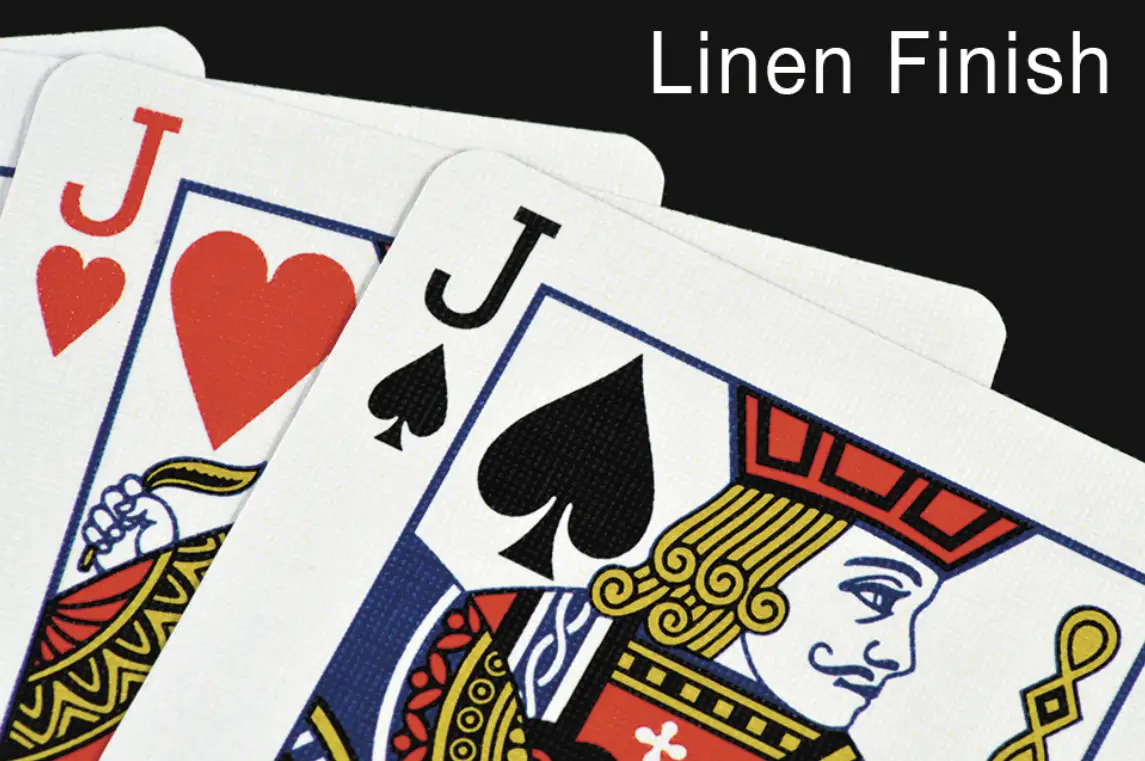
Benefits of Linen Finish
-
Enhanced Durability: The embossed texture helps reduce visible wear, making cards more resistant to scratches and creases.
-
Improved Handling: Ideal for sleight of hand and flourishes, the Linen finish offers a tactile grip without sticking.
-
Professional Look and Feel: That subtle texture creates a premium, sophisticated appearance that feels satisfying in the hand.
This finish is a favourite among professional magicians and cardists for its balance of control and fluidity. It’s also incredibly forgiving during fast-paced games, helping maintain crisp edges and clean surfaces even after extended use.
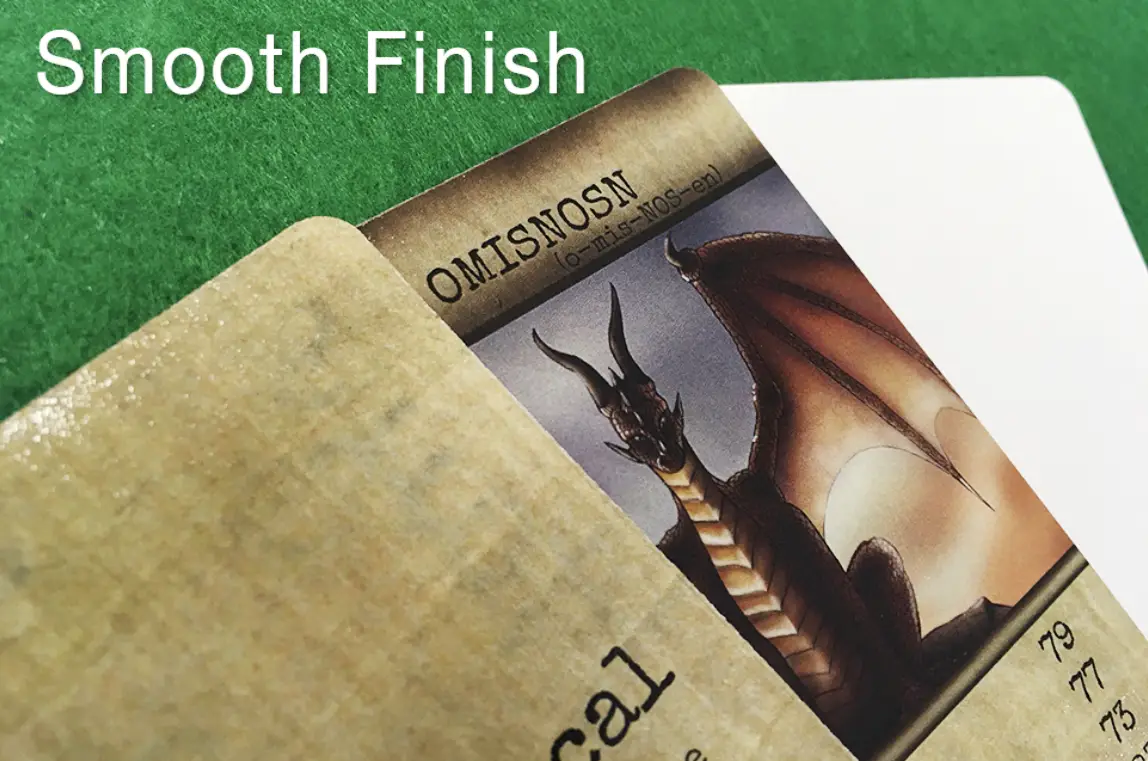
Benefits of Smooth Finish
-
Silky Shuffling: Smooth cards slide effortlessly, making for seamless overhand and riffle shuffles.
-
Vibrant Print Quality: With no surface embossing, artwork appears ultra-crisp and vivid, ideal for collectors or visually striking designs.
-
Long-Lasting Brilliance: The finish helps lock in colours, preventing fading or dulling over time.
Smooth finishes appeal to players and collectors alike who value a clean aesthetic and smooth handling. It provides a slick feel that’s both modern and classic.
8. Paper Stock & Finish
Common Choices
- Smooth finish: Clean look, softer handling
- Linen or textured finish: Improved grip, traditional feel
Consider:
Flash cards should withstand repeated handling without rapid wear.
Benefits of Linen Finish
-
Enhanced Durability: The embossed texture helps reduce visible wear, making cards more resistant to scratches and creases.
-
Improved Handling: Ideal for sleight of hand and flourishes, the Linen finish offers a tactile grip without sticking.
-
Professional Look and Feel: That subtle texture creates a premium, sophisticated appearance that feels satisfying in the hand.
This finish is a favourite among professional magicians and cardists for its balance of control and fluidity. It’s also incredibly forgiving during fast-paced games, helping maintain crisp edges and clean surfaces even after extended use.
Benefits of Smooth Finish
-
Silky Shuffling: Smooth cards slide effortlessly, making for seamless overhand and riffle shuffles.
-
Vibrant Print Quality: With no surface embossing, artwork appears ultra-crisp and vivid, ideal for collectors or visually striking designs.
-
Long-Lasting Brilliance: The finish helps lock in colours, preventing fading or dulling over time.
Smooth finishes appeal to players and collectors alike who value a clean aesthetic and smooth handling. It provides a slick feel that’s both modern and classic.
8. Paper Stock & Finish
Common Choices
- Smooth finish: Clean look, softer handling
- Linen or textured finish: Improved grip, traditional feel
Consider:
Flash cards should withstand repeated handling without rapid wear.
Benefits of Linen Finish
-
Enhanced Durability: The embossed texture helps reduce visible wear, making cards more resistant to scratches and creases.
-
Improved Handling: Ideal for sleight of hand and flourishes, the Linen finish offers a tactile grip without sticking.
-
Professional Look and Feel: That subtle texture creates a premium, sophisticated appearance that feels satisfying in the hand.
This finish is a favourite among professional magicians and cardists for its balance of control and fluidity. It’s also incredibly forgiving during fast-paced games, helping maintain crisp edges and clean surfaces even after extended use.
Benefits of Smooth Finish
-
Silky Shuffling: Smooth cards slide effortlessly, making for seamless overhand and riffle shuffles.
-
Vibrant Print Quality: With no surface embossing, artwork appears ultra-crisp and vivid, ideal for collectors or visually striking designs.
-
Long-Lasting Brilliance: The finish helps lock in colours, preventing fading or dulling over time.
Smooth finishes appeal to players and collectors alike who value a clean aesthetic and smooth handling. It provides a slick feel that’s both modern and classic.
9. Common Tarot Card Design Mistakes
-
Overcrowding cards with text
-
Inconsistent front/back logic
-
Low-contrast typography
-
Treating flash cards like marketing cards
-
Choosing thin or fragile stock
Learning tools must prioritise function.
10. Who This Deck Type Is Best For
Flash cards are ideal for:
-
Educators and teachers
-
Language learners
-
Coaches and therapists
-
Corporate training programs
If your project relies on symbolism or complex game mechanics, tarot or trump formats may be more suitable.
11. Ready to Print?
Once your flash card deck design is clear, consistent, and readable, you’re ready to move into production.
Test prints are strongly recommended, especially for decks with small text or colour coding.
9. Common Tarot Card Design Mistakes
-
Overcrowding cards with text
-
Inconsistent front/back logic
-
Low-contrast typography
-
Treating flash cards like marketing cards
-
Choosing thin or fragile stock
Learning tools must prioritise function.
10. Who This Deck Type Is Best For
Flash cards are ideal for:
-
Educators and teachers
-
Language learners
-
Coaches and therapists
-
Corporate training programs
If your project relies on symbolism or complex game mechanics, tarot or trump formats may be more suitable.
11. Ready to Print?
Once your flash card deck design is clear, consistent, and readable, you’re ready to move into production.
Test prints are strongly recommended, especially for decks with small text or colour coding.
9. Common Tarot Card Design Mistakes
-
Overcrowding cards with text
-
Inconsistent front/back logic
-
Low-contrast typography
-
Treating flash cards like marketing cards
-
Choosing thin or fragile stock
Learning tools must prioritise function.
10. Who This Deck Type Is Best For
Flash cards are ideal for:
-
Educators and teachers
-
Language learners
-
Coaches and therapists
-
Corporate training programs
If your project relies on symbolism or complex game mechanics, tarot or trump formats may be more suitable.
11. Ready to Print?
Once your flash card deck design is clear, consistent, and readable, you’re ready to move into production.
Test prints are strongly recommended, especially for decks with small text or colour coding.