
Oracle Card Deck Design Guide
This guide is for creators designing oracle cards sized 89 × 127 mm for spiritual practice, self-reflection, intuition-based readings, and personal growth. Oracle cards are meaning-driven and interpretive, offering open-ended guidance rather than fixed systems or rules.
Unlike tarot cards, oracle cards are non-standardised, the creator defines the structure, symbolism and flow of the deck.
1. What are Oracle Cards?
4. Symbolism & Theme
7. File Setup & Print Req.
10. Oracle Size Is Best For
2. Oracle Card Specifications
5. Card Back Design
8. Paper Stock & Finish
11. Ready to Print?
3. Card Face Design
6. Colour Considerations
9. Common Design Mistakes

1. What are Oracle Cards?
Oracle cards are symbolic cards used to:
-
Encourage intuition and reflection
-
Offer guidance, prompts, or insight
-
Support spiritual or personal growth practices
-
Facilitate self-inquiry and discussion
They are commonly used in:
-
Personal spiritual practice
-
Coaching and therapeutic settings
-
Journaling and reflection rituals
-
Workshops and group readings
Oracle cards are typically drawn individually and interpreted subjectively.
2. Oracle Card Specifications
Card Size
Size: 89 × 127 mm (3.5″ x 5.0″) View Full Advanced Size Guide
This size:
-
Fits comfortably in the hand
-
Is easy to shuffle and draw
-
Supports imagery with short supporting text
-
Balances portability with presence
It is similar than tarot cards and encourages concise visual storytelling.
Card Count
Oracle decks vary widely:
-
30–44 cards for focused themes
-
44–60 cards for broader systems
-
Larger decks are possible but should be clearly structured
Because there is no fixed system, clarity of intent matters more than card count.
Oracle Card Deck Design Guide
This guide is for creators designing oracle cards sized 89 × 127 mm for spiritual practice, self-reflection, intuition-based readings, and personal growth. Oracle cards are meaning-driven and interpretive, offering open-ended guidance rather than fixed systems or rules.
Unlike tarot cards, oracle cards are non-standardised, the creator defines the structure, symbolism and flow of the deck.
1. What are Oracle Cards?
2. Oracle Card Specifications
3. Card Face Design
4. Symbolism & Theme
5. Card Back Design
6. Colour Considerations
7. File Setup & Print Req.
8. Paper Stock & Finish
9. Common Design Mistakes
10. Oracle Size Is Best For
11. Ready to Print?
1. What are Oracle Cards?
Oracle cards are symbolic cards used to:
-
Encourage intuition and reflection
-
Offer guidance, prompts, or insight
-
Support spiritual or personal growth practices
-
Facilitate self-inquiry and discussion
They are commonly used in:
-
Personal spiritual practice
-
Coaching and therapeutic settings
-
Journaling and reflection rituals
-
Workshops and group readings
Oracle cards are typically drawn individually and interpreted subjectively.
2. Oracle Card Specifications
Card Size
Size: 89 × 127 mm (3.5″ x 5.0″) View Full Advanced Size Guide
This size:
-
Fits comfortably in the hand
-
Is easy to shuffle and draw
-
Supports imagery with short supporting text
-
Balances portability with presence
It is similar than tarot cards and encourages concise visual storytelling.
Card Count
Oracle decks vary widely:
-
30–44 cards for focused themes
-
44–60 cards for broader systems
-
Larger decks are possible but should be clearly structured
Because there is no fixed system, clarity of intent matters more than card count.
Oracle Card Deck Design Guide
This guide is for creators designing oracle cards sized 89 × 127 mm for spiritual practice, self-reflection, intuition-based readings, and personal growth. Oracle cards are meaning-driven and interpretive, offering open-ended guidance rather than fixed systems or rules.
Unlike tarot cards, oracle cards are non-standardised, the creator defines the structure, symbolism and flow of the deck.
1. What are Oracle Cards?
2. Oracle Card Specifications
3. Card Face Design
4. Symbolism & Theme
5. Card Back Design
6. Colour Considerations
7. File Setup & Print Req.
8. Paper Stock & Finish
9. Common Design Mistakes
10. Oracle Size Is Best For
11. Ready to Print?
1. What are Oracle Cards?
Oracle cards are symbolic cards used to:
-
Encourage intuition and reflection
-
Offer guidance, prompts, or insight
-
Support spiritual or personal growth practices
-
Facilitate self-inquiry and discussion
They are commonly used in:
-
Personal spiritual practice
-
Coaching and therapeutic settings
-
Journaling and reflection rituals
-
Workshops and group readings
Oracle cards are typically drawn individually and interpreted subjectively.
2. Oracle Card Specifications
Card Size
Size: 89 × 127 mm (3.5″ x 5.0″) View Full Advanced Size Guide
This size:
-
Fits comfortably in the hand
-
Is easy to shuffle and draw
-
Supports imagery with short supporting text
-
Balances portability with presence
It is similar than tarot cards and encourages concise visual storytelling.
Card Count
Oracle decks vary widely:
-
30–44 cards for focused themes
-
44–60 cards for broader systems
-
Larger decks are possible but should be clearly structured
Because there is no fixed system, clarity of intent matters more than card count.
3. Card Face Design
Imagery First
Oracle cards are image-led.
Best practices:
-
Use strong, symbolic imagery
-
Avoid cluttered compositions
-
Allow space for interpretation
Text, if used, should support—not explain—the image.
Text Usage
Common text approaches:
-
Single keywords or short phrases
-
Titles placed consistently
-
Minimal descriptive language
Avoid instructional or explanatory paragraphs on the card face.
3. Card Face Design
Imagery First
Oracle cards are image-led.
Best practices:
-
Use strong, symbolic imagery
-
Avoid cluttered compositions
-
Allow space for interpretation
Text, if used, should support—not explain—the image.
Text Usage
Common text approaches:
-
Single keywords or short phrases
-
Titles placed consistently
-
Minimal descriptive language
Avoid instructional or explanatory paragraphs on the card face.
3. Card Face Design
Imagery First
Oracle cards are image-led.
Best practices:
-
Use strong, symbolic imagery
-
Avoid cluttered compositions
-
Allow space for interpretation
Text, if used, should support—not explain—the image.
Text Usage
Common text approaches:
-
Single keywords or short phrases
-
Titles placed consistently
-
Minimal descriptive language
Avoid instructional or explanatory paragraphs on the card face.
4. Symbolism & Theme Consistency
Oracle decks rely on internal coherence.
Consider:
-
A clear overarching theme or worldview
-
Repeating visual motifs or symbols
-
Consistent artistic style across the deck
Meaning emerges through repetition and resonance, not rules.
5. Card Back Design
Orientation
Oracle cards usually use one-way orientation.
Design considerations:
-
Maintain consistent orientation across the deck
-
Avoid rotational ambiguity unless intentional
-
Ensure backs do not reveal card identity when face down
Backs should feel neutral and balanced.
Back Imagery
Card backs often include:
-
Symbolic patterns
-
Mandalas or geometric forms
-
Subtle textures or gradients
Avoid busy designs that distract from the reading experience.
4. Symbolism & Theme Consistency
Oracle decks rely on internal coherence.
Consider:
-
A clear overarching theme or worldview
-
Repeating visual motifs or symbols
-
Consistent artistic style across the deck
Meaning emerges through repetition and resonance, not rules.
5. Card Back Design
Orientation
Oracle cards usually use one-way orientation.
Design considerations:
-
Maintain consistent orientation across the deck
-
Avoid rotational ambiguity unless intentional
-
Ensure backs do not reveal card identity when face down
Backs should feel neutral and balanced.
Back Imagery
Card backs often include:
-
Symbolic patterns
-
Mandalas or geometric forms
-
Subtle textures or gradients
Avoid busy designs that distract from the reading experience.
4. Symbolism & Theme Consistency
Oracle decks rely on internal coherence.
Consider:
-
A clear overarching theme or worldview
-
Repeating visual motifs or symbols
-
Consistent artistic style across the deck
Meaning emerges through repetition and resonance, not rules.
5. Card Back Design
Orientation
Oracle cards usually use one-way orientation.
Design considerations:
-
Maintain consistent orientation across the deck
-
Avoid rotational ambiguity unless intentional
-
Ensure backs do not reveal card identity when face down
Backs should feel neutral and balanced.
Back Imagery
Card backs often include:
-
Symbolic patterns
-
Mandalas or geometric forms
-
Subtle textures or gradients
Avoid busy designs that distract from the reading experience.
6. Colour Considerations
-
Colour carries emotional and symbolic meaning
-
Maintain strong contrast for any text
-
Avoid overly dark or muddy palettes
Test prints are important
7. File Setup & Print Requirements
Bleed
-
Include bleed on all sides (3mm) – View Full Advanced Card Size Guide
-
Extend background elements fully into bleed
Never place:
-
Titles
-
Symbols
-
Borders
near the trim edge.
Safe Zone
Symbolic imagery still requires safe margins to avoid unintended cropping.
Resolution & Colour Mode
-
Minimum 300 DPI
-
CMYK colour mode
High-quality imagery benefits greatly from proof printing.
6. Colour Considerations
-
Colour carries emotional and symbolic meaning
-
Maintain strong contrast for any text
-
Avoid overly dark or muddy palettes
Test prints are important
7. File Setup & Print Requirements
Bleed
-
Include bleed on all sides (3mm) – View Full Advanced Card Size Guide
-
Extend background elements fully into bleed
Never place:
-
Titles
-
Symbols
-
Borders
near the trim edge.
Safe Zone
Symbolic imagery still requires safe margins to avoid unintended cropping.
Resolution & Colour Mode
-
Minimum 300 DPI
-
CMYK colour mode
High-quality imagery benefits greatly from proof printing.
6. Colour Considerations
-
Colour carries emotional and symbolic meaning
-
Maintain strong contrast for any text
-
Avoid overly dark or muddy palettes
Test prints are important
7. File Setup & Print Requirements
Bleed
-
Include bleed on all sides (3mm) – View Full Advanced Card Size Guide
-
Extend background elements fully into bleed
Never place:
-
Titles
-
Symbols
-
Borders
near the trim edge.
Safe Zone
Symbolic imagery still requires safe margins to avoid unintended cropping.
Resolution & Colour Mode
-
Minimum 300 DPI
-
CMYK colour mode
High-quality imagery benefits greatly from proof printing.
8. Paper Stock & Finish
Common Choices
- Smooth finish: Clean look, softer handling
- Linen or textured finish: Improved grip, traditional feel
Consider:
Oracle cards are handled frequently and slowly—feel matters.
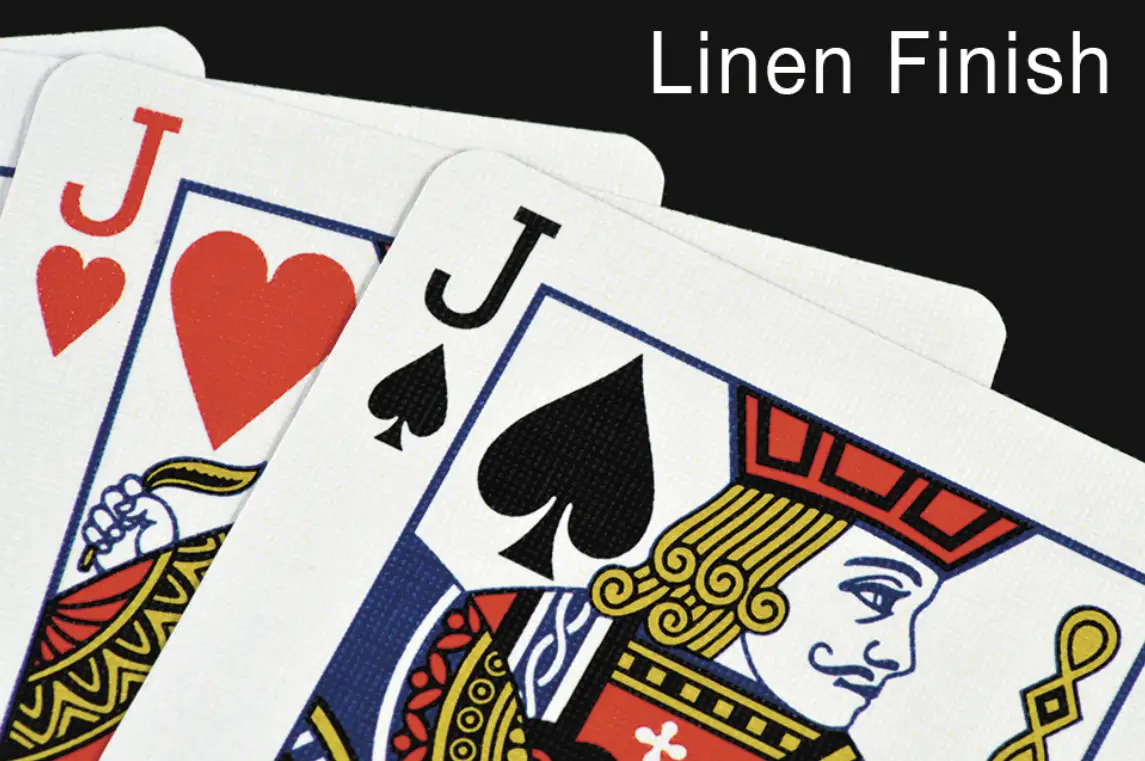
Benefits of Linen Finish
-
Enhanced Durability: The embossed texture helps reduce visible wear, making cards more resistant to scratches and creases.
-
Improved Handling: Ideal for sleight of hand and flourishes, the Linen finish offers a tactile grip without sticking.
-
Professional Look and Feel: That subtle texture creates a premium, sophisticated appearance that feels satisfying in the hand.
This finish is a favourite among professional magicians and cardists for its balance of control and fluidity. It’s also incredibly forgiving during fast-paced games, helping maintain crisp edges and clean surfaces even after extended use.
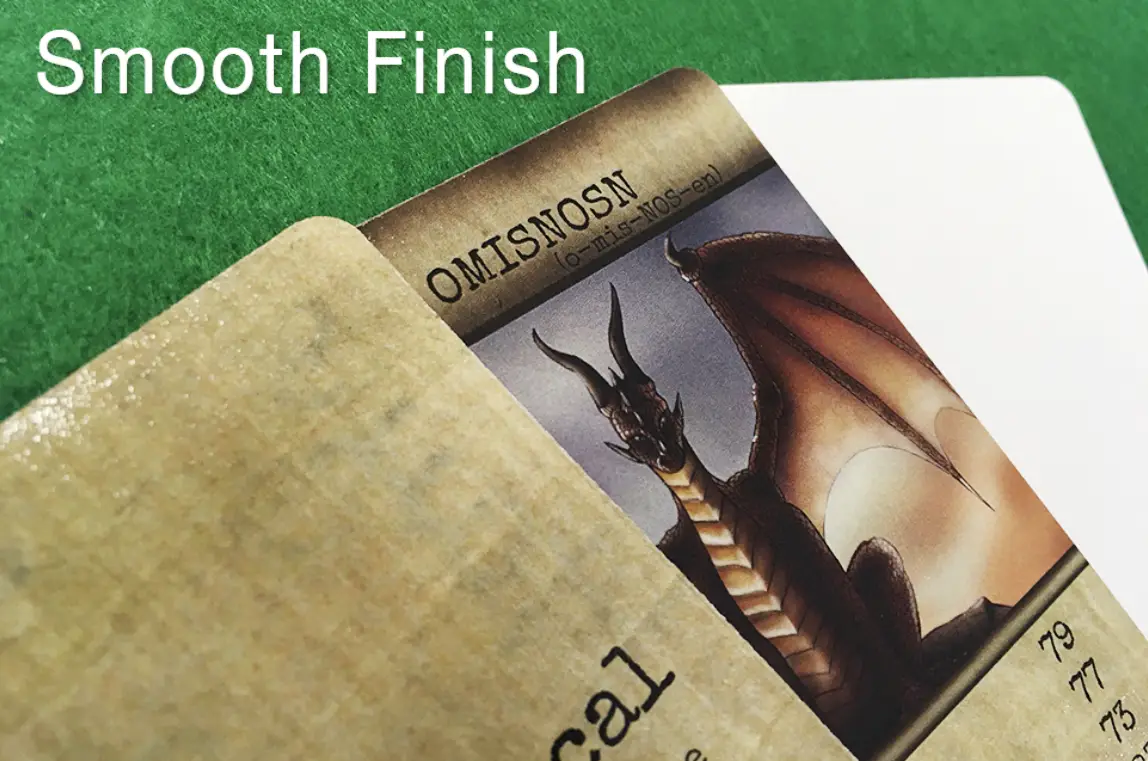
Benefits of Smooth Finish
-
Silky Shuffling: Smooth cards slide effortlessly, making for seamless overhand and riffle shuffles.
-
Vibrant Print Quality: With no surface embossing, artwork appears ultra-crisp and vivid, ideal for collectors or visually striking designs.
-
Long-Lasting Brilliance: The finish helps lock in colours, preventing fading or dulling over time.
Smooth finishes appeal to players and collectors alike who value a clean aesthetic and smooth handling. It provides a slick feel that’s both modern and classic.
8. Paper Stock & Finish
Common Choices
- Smooth finish: Clean look, softer handling
- Linen or textured finish: Improved grip, traditional feel
Consider:
Oracle cards are handled frequently and slowly—feel matters.
Benefits of Linen Finish
-
Enhanced Durability: The embossed texture helps reduce visible wear, making cards more resistant to scratches and creases.
-
Improved Handling: Ideal for sleight of hand and flourishes, the Linen finish offers a tactile grip without sticking.
-
Professional Look and Feel: That subtle texture creates a premium, sophisticated appearance that feels satisfying in the hand.
This finish is a favourite among professional magicians and cardists for its balance of control and fluidity. It’s also incredibly forgiving during fast-paced games, helping maintain crisp edges and clean surfaces even after extended use.
Benefits of Smooth Finish
-
Silky Shuffling: Smooth cards slide effortlessly, making for seamless overhand and riffle shuffles.
-
Vibrant Print Quality: With no surface embossing, artwork appears ultra-crisp and vivid, ideal for collectors or visually striking designs.
-
Long-Lasting Brilliance: The finish helps lock in colours, preventing fading or dulling over time.
Smooth finishes appeal to players and collectors alike who value a clean aesthetic and smooth handling. It provides a slick feel that’s both modern and classic.
8. Paper Stock & Finish
Common Choices
- Smooth finish: Clean look, softer handling
- Linen or textured finish: Improved grip, traditional feel
Consider:
Oracle cards are handled frequently and slowly—feel matters.
Benefits of Linen Finish
-
Enhanced Durability: The embossed texture helps reduce visible wear, making cards more resistant to scratches and creases.
-
Improved Handling: Ideal for sleight of hand and flourishes, the Linen finish offers a tactile grip without sticking.
-
Professional Look and Feel: That subtle texture creates a premium, sophisticated appearance that feels satisfying in the hand.
This finish is a favourite among professional magicians and cardists for its balance of control and fluidity. It’s also incredibly forgiving during fast-paced games, helping maintain crisp edges and clean surfaces even after extended use.
Benefits of Smooth Finish
-
Silky Shuffling: Smooth cards slide effortlessly, making for seamless overhand and riffle shuffles.
-
Vibrant Print Quality: With no surface embossing, artwork appears ultra-crisp and vivid, ideal for collectors or visually striking designs.
-
Long-Lasting Brilliance: The finish helps lock in colours, preventing fading or dulling over time.
Smooth finishes appeal to players and collectors alike who value a clean aesthetic and smooth handling. It provides a slick feel that’s both modern and classic.
9. Common Oracle Card Design Mistakes
-
Over-explaining symbolism on the card
-
Mixing too many visual styles
-
Inconsistent text placement
-
Busy or distracting backs
-
Treating oracle cards like tarot cards
Ambiguity is a feature, not a flaw when handled intentionally.
10. Who This Deck Type Is Best For
Oracle cards are ideal for:
-
Spiritual and wellness creators
-
Coaches and facilitators
-
Artists and illustrators
-
Personal growth and mindfulness tools
If your project requires fixed meanings, formal spreads, or traditional structure, tarot cards may be more appropriate.
11. Ready to Print?
Once your oracle card deck feels coherent, intentional and visually balanced, you’re ready to move into production.
Proof prints are strongly recommended to validate colour, symbolism and tactile feel.
9. Common Oracle Card Design Mistakes
-
Over-explaining symbolism on the card
-
Mixing too many visual styles
-
Inconsistent text placement
-
Busy or distracting backs
-
Treating oracle cards like tarot cards
Ambiguity is a feature, not a flaw when handled intentionally.
10. Who This Deck Type Is Best For
Oracle cards are ideal for:
-
Spiritual and wellness creators
-
Coaches and facilitators
-
Artists and illustrators
-
Personal growth and mindfulness tools
If your project requires fixed meanings, formal spreads, or traditional structure, tarot cards may be more appropriate.
11. Ready to Print?
Once your oracle card deck feels coherent, intentional and visually balanced, you’re ready to move into production.
Proof prints are strongly recommended to validate colour, symbolism and tactile feel.
9. Common Oracle Card Design Mistakes
-
Over-explaining symbolism on the card
-
Mixing too many visual styles
-
Inconsistent text placement
-
Busy or distracting backs
-
Treating oracle cards like tarot cards
Ambiguity is a feature, not a flaw when handled intentionally.
10. Who This Deck Type Is Best For
Oracle cards are ideal for:
-
Spiritual and wellness creators
-
Coaches and facilitators
-
Artists and illustrators
-
Personal growth and mindfulness tools
If your project requires fixed meanings, formal spreads, or traditional structure, tarot cards may be more appropriate.
11. Ready to Print?
Once your oracle card deck feels coherent, intentional and visually balanced, you’re ready to move into production.
Proof prints are strongly recommended to validate colour, symbolism and tactile feel.