
Tarot Card Deck Design Guide
This guide is for creators designing custom tarot cards for divination, education, self-reflection, or artistic projects. Tarot decks differ fundamentally from poker and bridge cards: they are symbolic tools first, game components second.
This guide explains both the structural requirements of tarot decks and the design considerations that make them intuitive, meaningful, and printable.
1. What are Tarot Cards?
7. File Setup & Print Req.
10. Tarot Size Is Best For
2. Tarot Card Specifications
5. Card Back Design
8. Paper Stock & Finish
11. Ready to Print?
3. Card Face Design
6. Colour Considerations
9. Common Design Mistakes
1. What are Tarot Cards?
Tarot cards are a symbolic system traditionally used for:
-
Divination and spiritual practice
-
Self-reflection and meditation
-
Education and storytelling
-
Artistic or thematic deck projects
A tarot deck is defined not just by size, but by structure, sequence, and symbolism. Respecting this structure is essential for usability and acceptance.
2. Standard Tarot Card Specifications
Card Size
Tarot size:
- 70 × 120 mm (2.75″ x 4.72″ Inches) – View Full Advanced Size Guide
Allow:
-
More detailed illustrations
-
Better symbolic clarity
-
A ceremonial, tactile feel
Card Count
A traditional tarot deck contains 78 cards:
-
22 Major Arcana
-
56 Minor Arcana
Custom variations are possible, but altering the count changes how the deck is used and interpreted.
Tarot Card Deck
Design Guide
This guide is for creators designing custom tarot cards for divination, education, self-reflection, or artistic projects. Tarot decks differ fundamentally from poker and bridge cards: they are symbolic tools first, game components second.
This guide explains both the structural requirements of tarot decks and the design considerations that make them intuitive, meaningful, and printable.
1. What are Tarot Cards?
2. Tarot Card Specifications
3. Card Face Design
4. Symbolism & Imagery
5. Card Back Design
6. Colour Considerations
7. File Setup & Print Req.
8. Paper Stock & Finish
9. Common Design Mistakes
10. Tarot Size Is Best For
11. Ready to Print?
1. What are Tarot Cards?
Tarot cards are a symbolic system traditionally used for:
-
Divination and spiritual practice
-
Self-reflection and meditation
-
Education and storytelling
-
Artistic or thematic deck projects
A tarot deck is defined not just by size, but by structure, sequence, and symbolism. Respecting this structure is essential for usability and acceptance.
2. Standard Tarot Card Specifications
Card Size
Tarot size:
- 70 × 120 mm (2.75″ x 4.72″ Inches) – View Full Advanced Size Guide
Allow:
-
More detailed illustrations
-
Better symbolic clarity
-
A ceremonial, tactile feel
Card Count
A traditional tarot deck contains 78 cards:
-
22 Major Arcana
-
56 Minor Arcana
Custom variations are possible, but altering the count changes how the deck is used and interpreted.
Tarot Card Deck Design Guide
This guide is for creators designing custom tarot cards for divination, education, self-reflection, or artistic projects. Tarot decks differ fundamentally from poker and bridge cards: they are symbolic tools first, game components second.
This guide explains both the structural requirements of tarot decks and the design considerations that make them intuitive, meaningful, and printable.
1. What are Tarot Cards?
2. Tarot Card Specifications
3. Card Face Design
4. Symbolism & Imagery
5. Card Back Design
6. Colour Considerations
7. File Setup & Print Req.
8. Paper Stock & Finish
9. Common Design Mistakes
10. Tarot Size Is Best For
11. Ready to Print?
1. What are Tarot Cards?
Tarot cards are a symbolic system traditionally used for:
-
Divination and spiritual practice
-
Self-reflection and meditation
-
Education and storytelling
-
Artistic or thematic deck projects
A tarot deck is defined not just by size, but by structure, sequence, and symbolism. Respecting this structure is essential for usability and acceptance.
2. Standard Tarot Card Specifications
Card Size
Tarot size:
- 70 × 120 mm (2.75″ x 4.72″ Inches) – View Full Advanced Size Guide
Allow:
-
More detailed illustrations
-
Better symbolic clarity
-
A ceremonial, tactile feel
Card Count
A traditional tarot deck contains 78 cards:
-
22 Major Arcana
-
56 Minor Arcana
Custom variations are possible, but altering the count changes how the deck is used and interpreted.
3. Card Face Design
Titles & Naming
Most tarot decks include card titles.
Best practices:
-
Place titles consistently (top, bottom, or within frame)
-
Use clear, readable typography
-
Maintain naming consistency across the deck
Some modern decks remove titles entirely, but this assumes an experienced audience.
Major Arcana
The Major Arcana are the conceptual backbone of the deck.
Design considerations:
-
Strong central imagery
-
Clear symbolic hierarchy
-
Consistent visual language across all 22 cards
Even highly abstract decks should preserve each card’s unique identity.
Minor Arcana
The Minor Arcana are divided into four suits:
-
Cups
-
Pentacles (or Coins)
-
Swords
-
Wands
Design approaches:
-
Fully illustrated scenes (common in modern decks)
-
Non-illustrated pip-style designs (traditional)
Choose one approach and apply it consistently.
3. Card Face Design
Titles & Naming
Most tarot decks include card titles.
Best practices:
-
Place titles consistently (top, bottom, or within frame)
-
Use clear, readable typography
-
Maintain naming consistency across the deck
Some modern decks remove titles entirely, but this assumes an experienced audience.
Major Arcana
The Major Arcana are the conceptual backbone of the deck.
Design considerations:
-
Strong central imagery
-
Clear symbolic hierarchy
-
Consistent visual language across all 22 cards
Even highly abstract decks should preserve each card’s unique identity.
Minor Arcana
The Minor Arcana are divided into four suits:
-
Cups
-
Pentacles (or Coins)
-
Swords
-
Wands
Design approaches:
-
Fully illustrated scenes (common in modern decks)
-
Non-illustrated pip-style designs (traditional)
Choose one approach and apply it consistently.
3. Card Face Design
Titles & Naming
Most tarot decks include card titles.
Best practices:
-
Place titles consistently (top, bottom, or within frame)
-
Use clear, readable typography
-
Maintain naming consistency across the deck
Some modern decks remove titles entirely, but this assumes an experienced audience.
Major Arcana
The Major Arcana are the conceptual backbone of the deck.
Design considerations:
-
Strong central imagery
-
Clear symbolic hierarchy
-
Consistent visual language across all 22 cards
Even highly abstract decks should preserve each card’s unique identity.
Minor Arcana
The Minor Arcana are divided into four suits:
-
Cups
-
Pentacles (or Coins)
-
Swords
-
Wands
Design approaches:
-
Fully illustrated scenes (common in modern decks)
-
Non-illustrated pip-style designs (traditional)
Choose one approach and apply it consistently.
4. Symbolism & Imagery
Tarot relies on symbolism more than immediate legibility.
Consider:
-
Cultural and mythological references
-
Emotional tone and narrative
-
Repetition of visual motifs
Clarity of meaning matters more than decorative complexity.
5. Card Back Design
Symmetry
Tarot card backs should be fully symmetrical.
Why this matters:
-
Prevents reversed-orientation cues
-
Supports upright and reversed readings
-
Feels intentional and professional
One-way backs undermine core tarot practices.
Borders vs Full Bleed
Framed or bordered designs:
-
Emphasize illustration as a window
-
Help hide cutting tolerances
-
Feel traditional
Full-bleed designs:
-
Feel modern and immersive
-
Require careful bleed control
Choose based on artistic intent and production experience.
4. Symbolism & Imagery
Tarot relies on symbolism more than immediate legibility.
Consider:
-
Cultural and mythological references
-
Emotional tone and narrative
-
Repetition of visual motifs
Clarity of meaning matters more than decorative complexity.
5. Card Back Design
Symmetry
Tarot card backs should be fully symmetrical.
Why this matters:
-
Prevents reversed-orientation cues
-
Supports upright and reversed readings
-
Feels intentional and professional
One-way backs undermine core tarot practices.
Borders vs Full Bleed
Framed or bordered designs:
-
Emphasize illustration as a window
-
Help hide cutting tolerances
-
Feel traditional
Full-bleed designs:
-
Feel modern and immersive
-
Require careful bleed control
Choose based on artistic intent and production experience.
4. Symbolism & Imagery
Tarot relies on symbolism more than immediate legibility.
Consider:
-
Cultural and mythological references
-
Emotional tone and narrative
-
Repetition of visual motifs
Clarity of meaning matters more than decorative complexity.
5. Card Back Design
Symmetry
Tarot card backs should be fully symmetrical.
Why this matters:
-
Prevents reversed-orientation cues
-
Supports upright and reversed readings
-
Feels intentional and professional
One-way backs undermine core tarot practices.
Borders vs Full Bleed
Framed or bordered designs:
-
Emphasize illustration as a window
-
Help hide cutting tolerances
-
Feel traditional
Full-bleed designs:
-
Feel modern and immersive
-
Require careful bleed control
Choose based on artistic intent and production experience.
6. Colour Considerations
- Use colours deliberately to support symbolism
- Maintain sufficient contrast for printed detail
- Avoid extremely dark edges that show wear quickly
Colour consistency across the entire deck is more important than individual card impact.
7. File Setup & Print Requirements
Bleed
-
Include bleed on all sides (3mm) – View Full Advanced Card Size Guide
-
Extend background elements fully into bleed
Never place:
-
Titles
-
Important symbols
-
Key imagery
near the trim edge.
Safe Zone
Tarot cards often include frames or borders—ensure these sit comfortably within the safe zone to avoid uneven trimming.
Resolution & Colour Mode
-
Minimum 300 DPI
-
CMYK colour mode
Test prints are strongly recommended for colour-sensitive decks.
6. Colour Considerations
- Use colours deliberately to support symbolism
- Maintain sufficient contrast for printed detail
- Avoid extremely dark edges that show wear quickly
Colour consistency across the entire deck is more important than individual card impact.
7. File Setup & Print Requirements
Bleed
-
Include bleed on all sides (3mm) – View Full Advanced Card Size Guide
-
Extend background elements fully into bleed
Never place:
-
Titles
-
Important symbols
-
Key imagery
near the trim edge.
Safe Zone
Tarot cards often include frames or borders—ensure these sit comfortably within the safe zone to avoid uneven trimming.
Resolution & Colour Mode
-
Minimum 300 DPI
-
CMYK colour mode
Test prints are strongly recommended for colour-sensitive decks.
6. Colour Considerations
- Use colours deliberately to support symbolism
- Maintain sufficient contrast for printed detail
- Avoid extremely dark edges that show wear quickly
Colour consistency across the entire deck is more important than individual card impact.
7. File Setup & Print Requirements
Bleed
-
Include bleed on all sides (3mm) – View Full Advanced Card Size Guide
-
Extend background elements fully into bleed
Never place:
-
Titles
-
Important symbols
-
Key imagery
near the trim edge.
Safe Zone
Tarot cards often include frames or borders—ensure these sit comfortably within the safe zone to avoid uneven trimming.
Resolution & Colour Mode
-
Minimum 300 DPI
-
CMYK colour mode
Test prints are strongly recommended for colour-sensitive decks.
8. Paper Stock & Finish
Common Choices
- Smooth finish: Clean look, softer handling
- Linen or textured finish: Improved grip, traditional feel
Consider:
Choose a stock that complements how the deck will be handled and used.
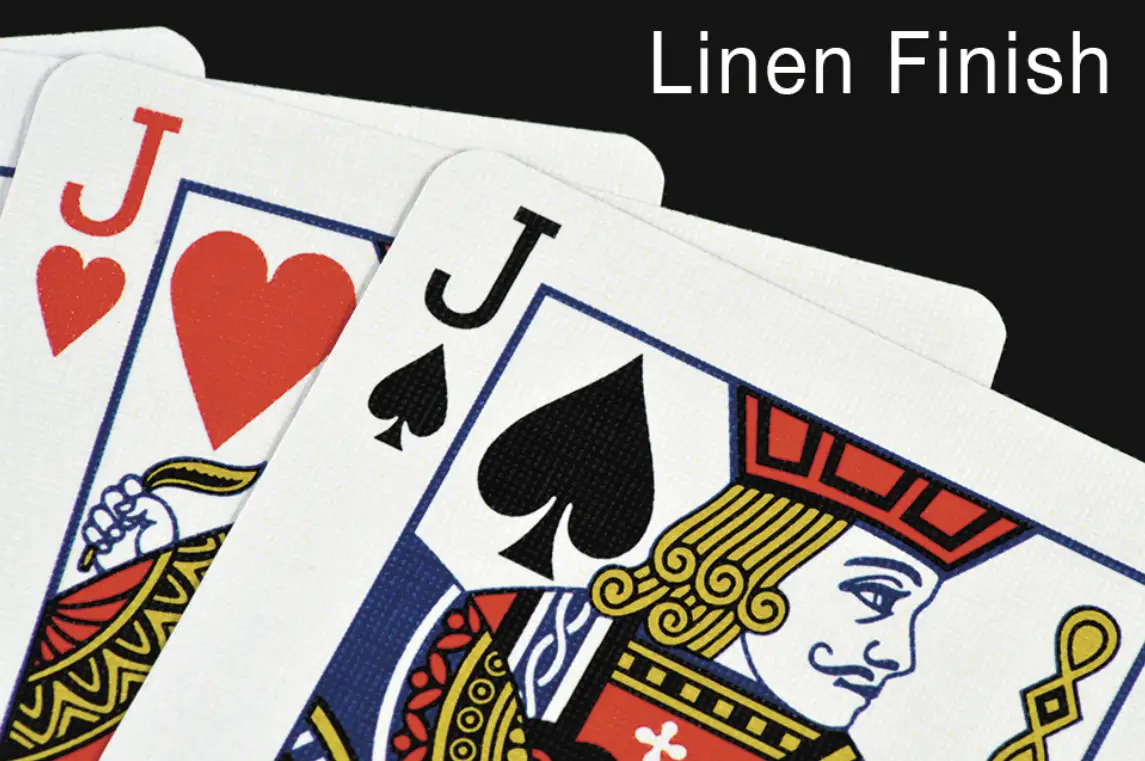
Benefits of Linen Finish
-
Enhanced Durability: The embossed texture helps reduce visible wear, making cards more resistant to scratches and creases.
-
Improved Handling: Ideal for sleight of hand and flourishes, the Linen finish offers a tactile grip without sticking.
-
Professional Look and Feel: That subtle texture creates a premium, sophisticated appearance that feels satisfying in the hand.
This finish is a favourite among professional magicians and cardists for its balance of control and fluidity. It’s also incredibly forgiving during fast-paced games, helping maintain crisp edges and clean surfaces even after extended use.
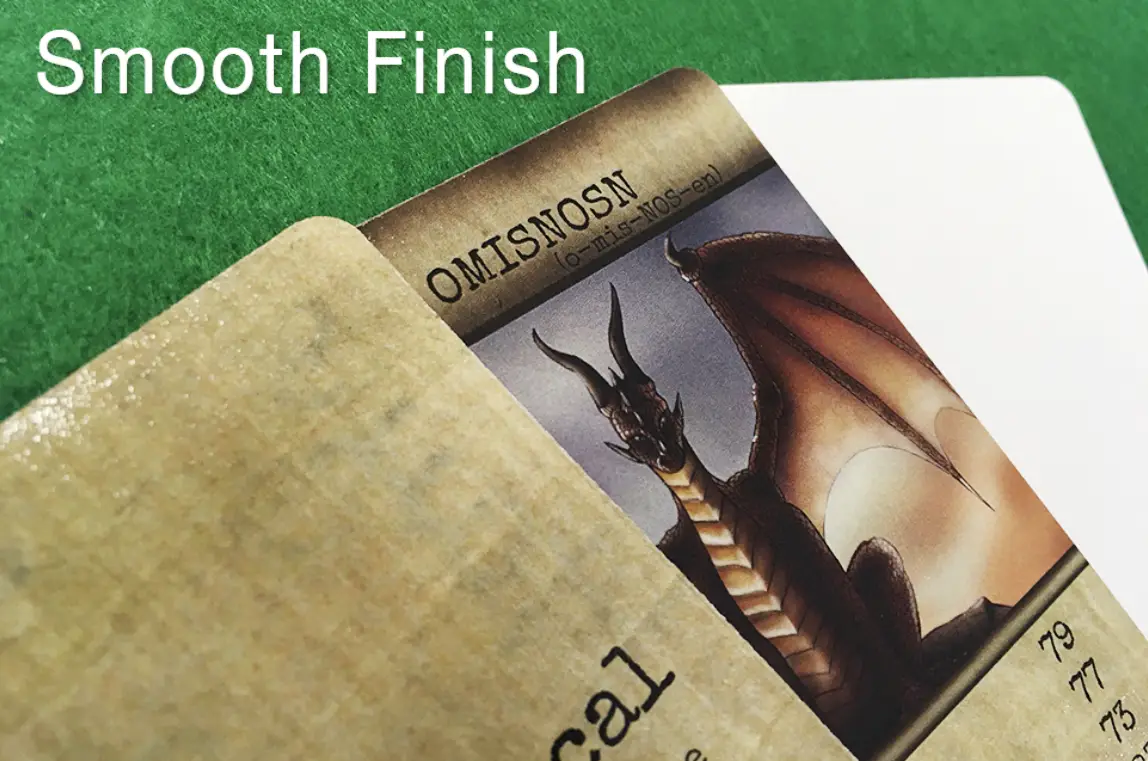
Benefits of Smooth Finish
-
Silky Shuffling: Smooth cards slide effortlessly, making for seamless overhand and riffle shuffles.
-
Vibrant Print Quality: With no surface embossing, artwork appears ultra-crisp and vivid, ideal for collectors or visually striking designs.
-
Long-Lasting Brilliance: The finish helps lock in colours, preventing fading or dulling over time.
Smooth finishes appeal to players and collectors alike who value a clean aesthetic and smooth handling. It provides a slick feel that’s both modern and classic.
8. Paper Stock & Finish
Common Choices
- Smooth finish: Clean look, softer handling
- Linen or textured finish: Improved grip, traditional feel
Consider:
Choose a stock that complements how the deck will be handled and used.
Benefits of Linen Finish
-
Enhanced Durability: The embossed texture helps reduce visible wear, making cards more resistant to scratches and creases.
-
Improved Handling: Ideal for sleight of hand and flourishes, the Linen finish offers a tactile grip without sticking.
-
Professional Look and Feel: That subtle texture creates a premium, sophisticated appearance that feels satisfying in the hand.
This finish is a favourite among professional magicians and cardists for its balance of control and fluidity. It’s also incredibly forgiving during fast-paced games, helping maintain crisp edges and clean surfaces even after extended use.
Benefits of Smooth Finish
-
Silky Shuffling: Smooth cards slide effortlessly, making for seamless overhand and riffle shuffles.
-
Vibrant Print Quality: With no surface embossing, artwork appears ultra-crisp and vivid, ideal for collectors or visually striking designs.
-
Long-Lasting Brilliance: The finish helps lock in colours, preventing fading or dulling over time.
Smooth finishes appeal to players and collectors alike who value a clean aesthetic and smooth handling. It provides a slick feel that’s both modern and classic.
8. Paper Stock & Finish
Common Choices
- Smooth finish: Clean look, softer handling
- Linen or textured finish: Improved grip, traditional feel
Consider:
Choose a stock that complements how the deck will be handled and used.
Benefits of Linen Finish
-
Enhanced Durability: The embossed texture helps reduce visible wear, making cards more resistant to scratches and creases.
-
Improved Handling: Ideal for sleight of hand and flourishes, the Linen finish offers a tactile grip without sticking.
-
Professional Look and Feel: That subtle texture creates a premium, sophisticated appearance that feels satisfying in the hand.
This finish is a favourite among professional magicians and cardists for its balance of control and fluidity. It’s also incredibly forgiving during fast-paced games, helping maintain crisp edges and clean surfaces even after extended use.
Benefits of Smooth Finish
-
Silky Shuffling: Smooth cards slide effortlessly, making for seamless overhand and riffle shuffles.
-
Vibrant Print Quality: With no surface embossing, artwork appears ultra-crisp and vivid, ideal for collectors or visually striking designs.
-
Long-Lasting Brilliance: The finish helps lock in colours, preventing fading or dulling over time.
Smooth finishes appeal to players and collectors alike who value a clean aesthetic and smooth handling. It provides a slick feel that’s both modern and classic.
9. Common Tarot Card Design Mistakes
- Inconsistent symbolism across cards
- Ignoring traditional deck structure
- Overcrowding illustrations
- One-way card backs
- Placing titles too close to trim edges
Tarot users notice inconsistencies quickly, cohesion is critical.
10. Who This Deck Type Is Best For
Tarot cards are ideal for:
- Spiritual practitioners
- Artists and illustrators
- Educators and therapists
- Self-reflection and mindfulness projects
If your deck is focused on fast gameplay or strict mechanics, poker or bridge formats may be more appropriate.
11. Ready to Print?
Once your tarot deck follows these guidelines, you’re ready to move toward production.
Proofing is essential, especially for colour, border alignment, and symbolic clarity.
9. Common Tarot Card Design Mistakes
- Inconsistent symbolism across cards
- Ignoring traditional deck structure
- Overcrowding illustrations
- One-way card backs
- Placing titles too close to trim edges
Tarot users notice inconsistencies quickly, cohesion is critical.
10. Who This Deck Type Is Best For
Tarot cards are ideal for:
- Spiritual practitioners
- Artists and illustrators
- Educators and therapists
- Self-reflection and mindfulness projects
If your deck is focused on fast gameplay or strict mechanics, poker or bridge formats may be more appropriate.
11. Ready to Print?
Once your tarot deck follows these guidelines, you’re ready to move toward production.
Proofing is essential, especially for colour, border alignment, and symbolic clarity.
9. Common Tarot Card Design Mistakes
- Inconsistent symbolism across cards
- Ignoring traditional deck structure
- Overcrowding illustrations
- One-way card backs
- Placing titles too close to trim edges
Tarot users notice inconsistencies quickly, cohesion is critical.
10. Who This Deck Type Is Best For
Tarot cards are ideal for:
- Spiritual practitioners
- Artists and illustrators
- Educators and therapists
- Self-reflection and mindfulness projects
If your deck is focused on fast gameplay or strict mechanics, poker or bridge formats may be more appropriate.
11. Ready to Print?
Once your tarot deck follows these guidelines, you’re ready to move toward production.
Proofing is essential, especially for colour, border alignment, and symbolic clarity.